The Montessori Philosophy is an innovative, child-centered approach to education developed over a century ago by Dr. Maria Montessori, an Italian physician and educator. The method, rooted in a deep understanding of child development, focuses on fostering a child’s natural interests and curiosity.
The Prepared Environment
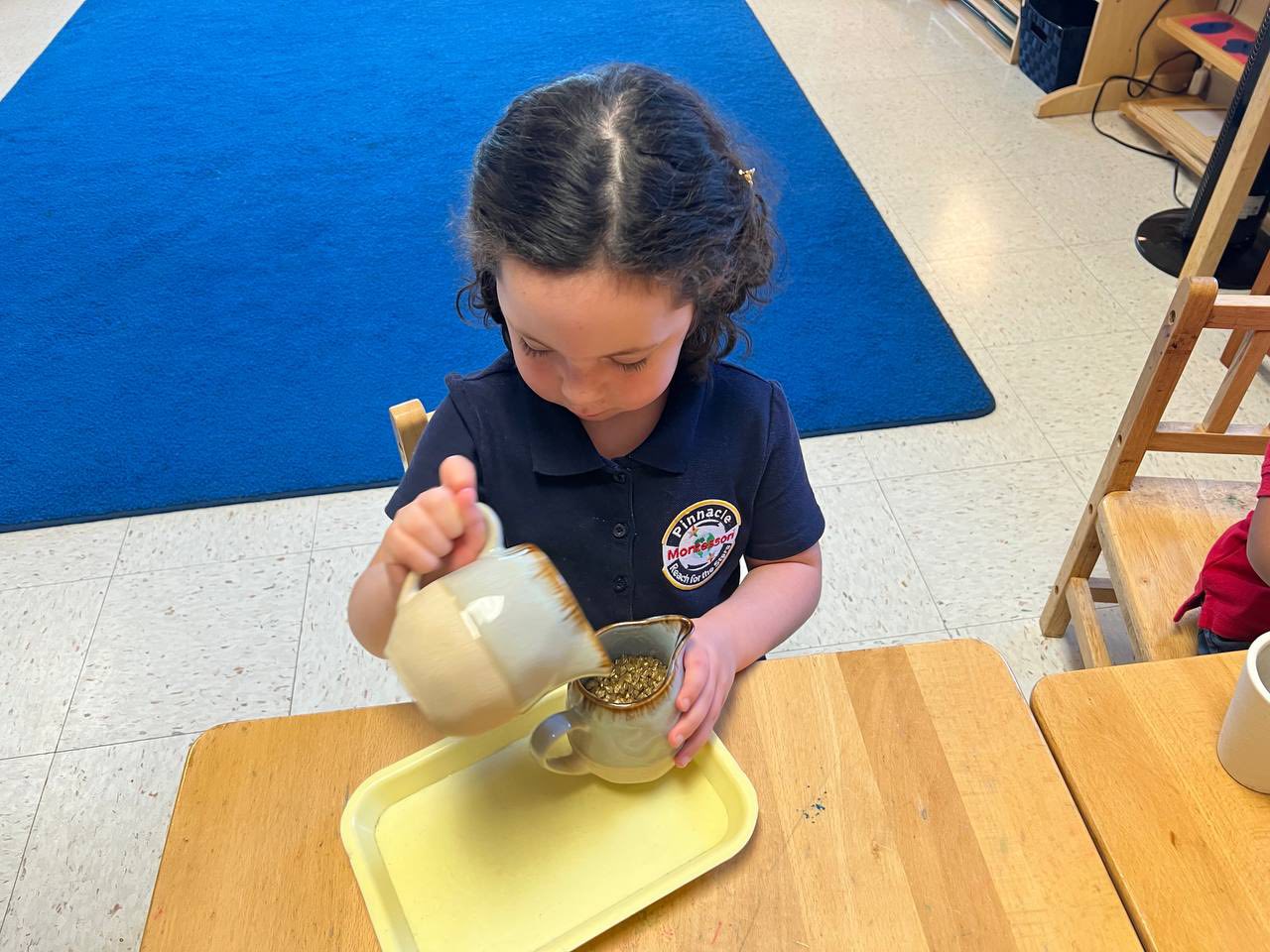
Our Montessori classrooms are meticulously organized to cater to children’s needs. Everything, from the furniture to the learning materials, is accessible, allowing children to engage with their environment freely.
This environment fosters independence, curiosity, and decision-making skills. Children learn to be responsible by choosing tasks and returning materials to their designated places.
Montessori Materials
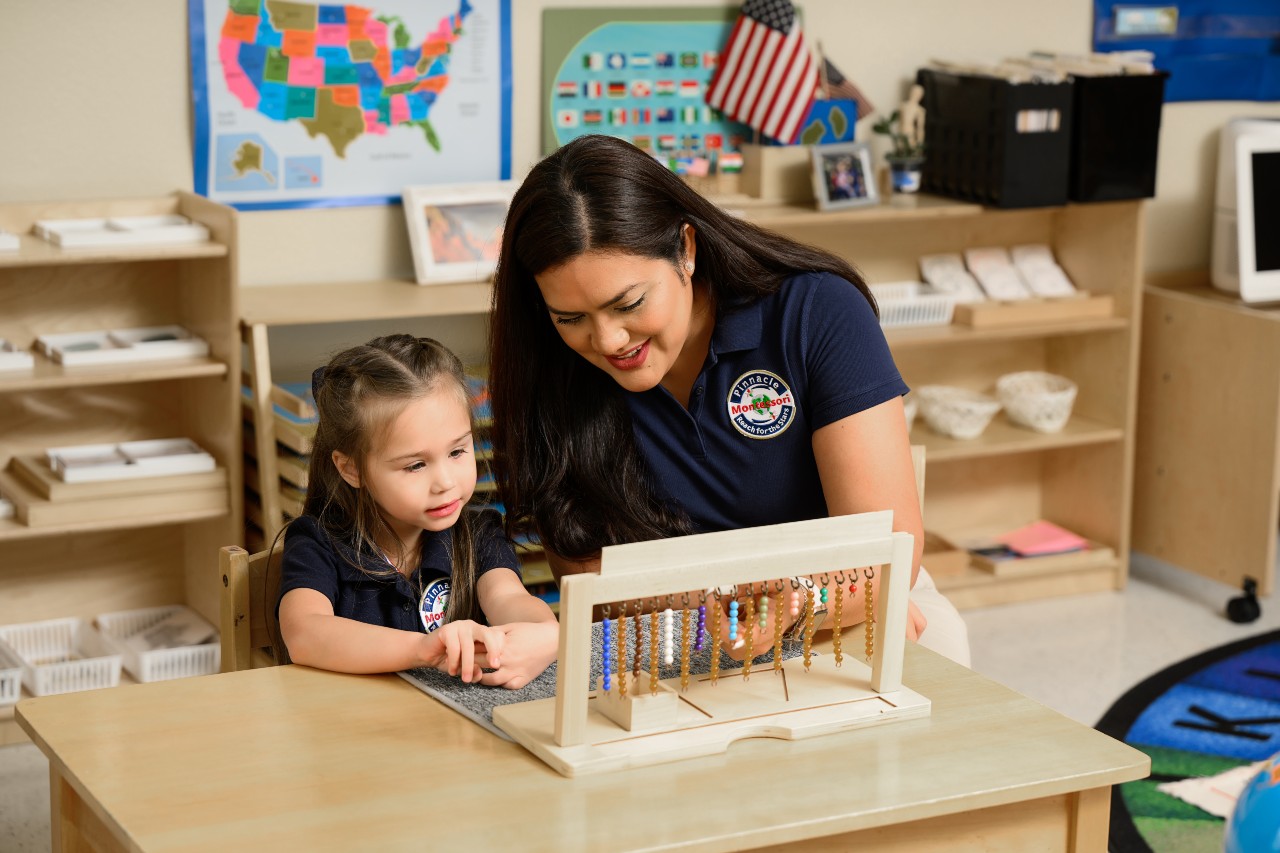
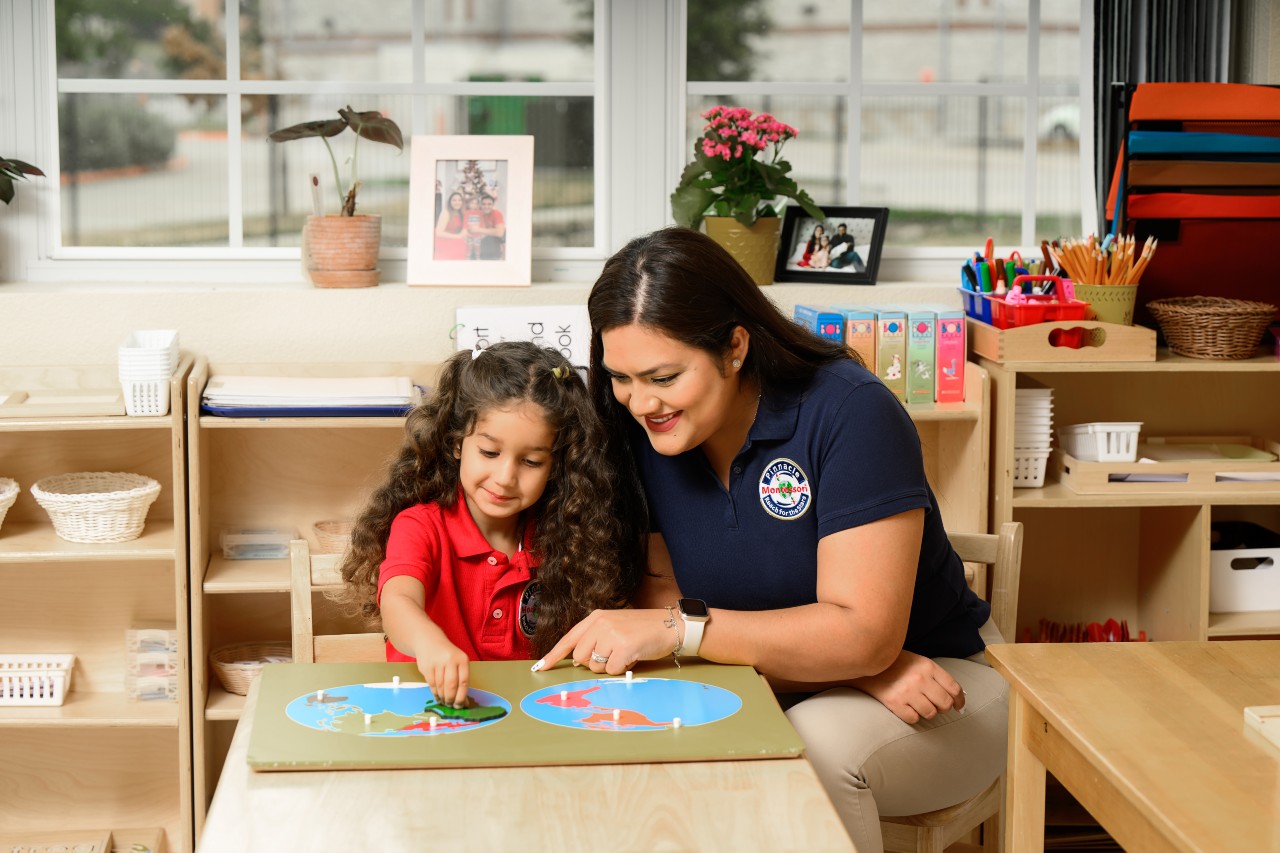
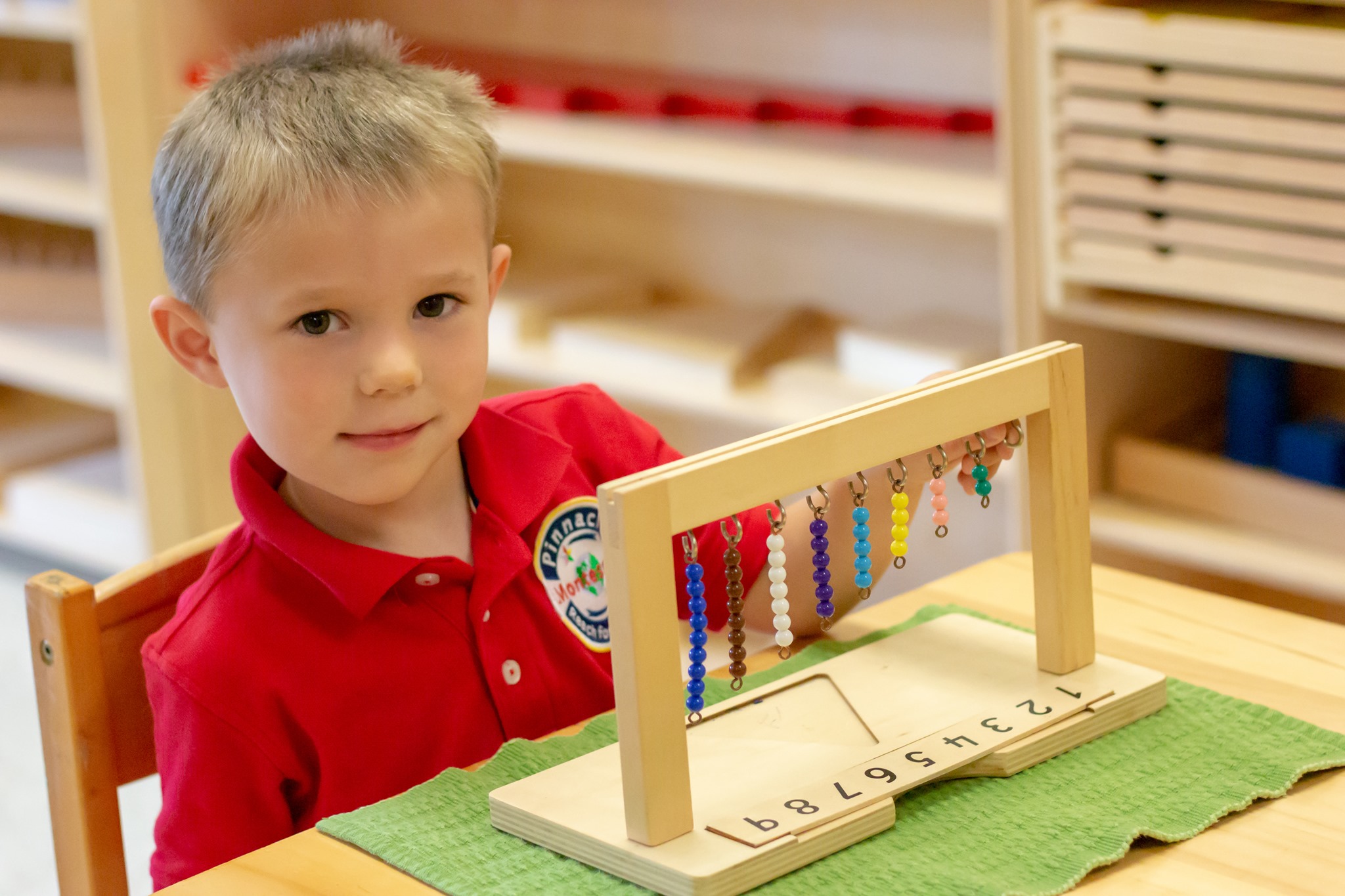
Our classrooms are equipped with specialized, hands-on learning materials, often made from natural, tactile materials. These materials are self-correcting, allowing students to recognize and learn from their errors independently.
These tangible tools enhance conceptual understanding, strengthen fine motor skills, and foster a sense of accomplishment as children master the use of each material.
Child-Directed Learning
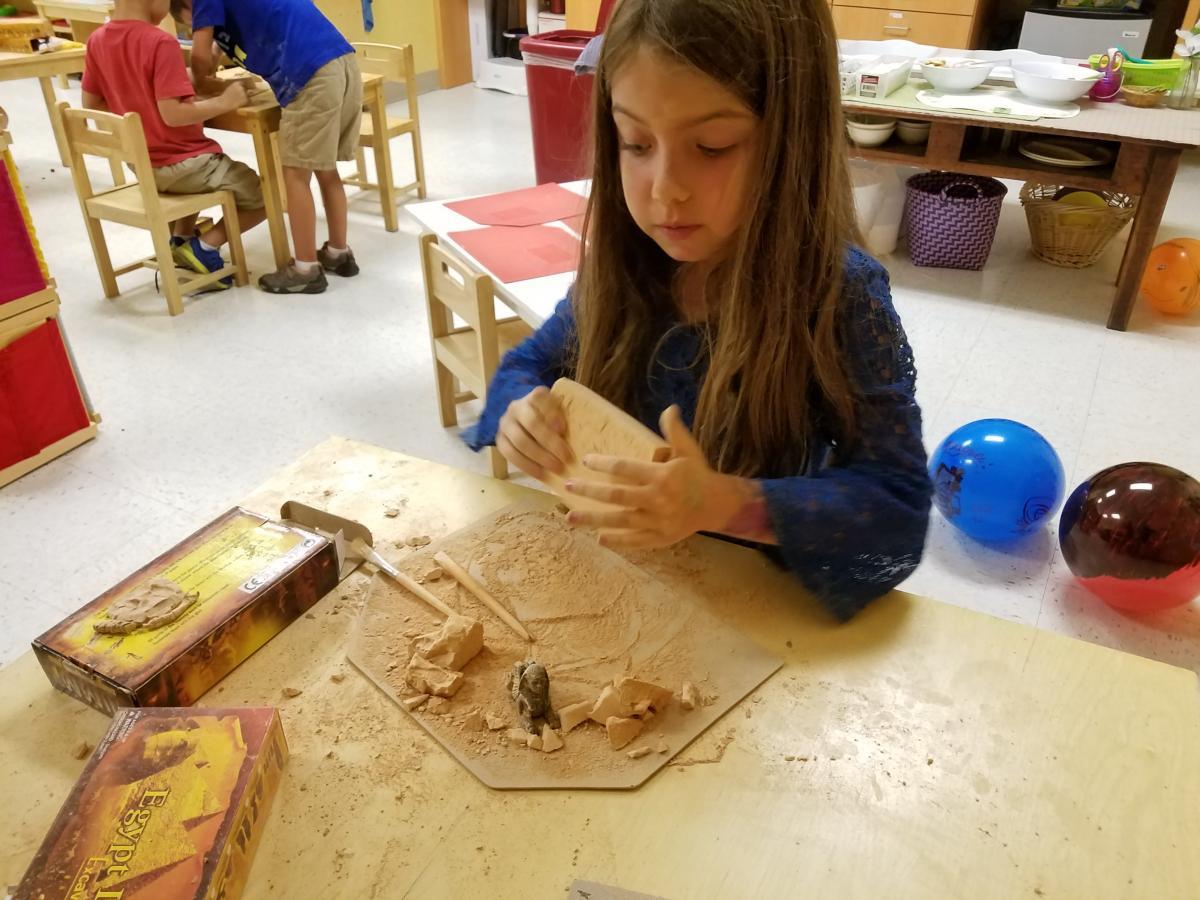
Children are encouraged to choose activities based on their interests. The teacher acts as a guide rather than the primary source of knowledge, facilitating each child’s exploration.
This approach fosters intrinsic motivation, allowing children to pursue their passions and develop a love for learning. It also enhances self-esteem and self-discipline.
Mixed-Age Groupings
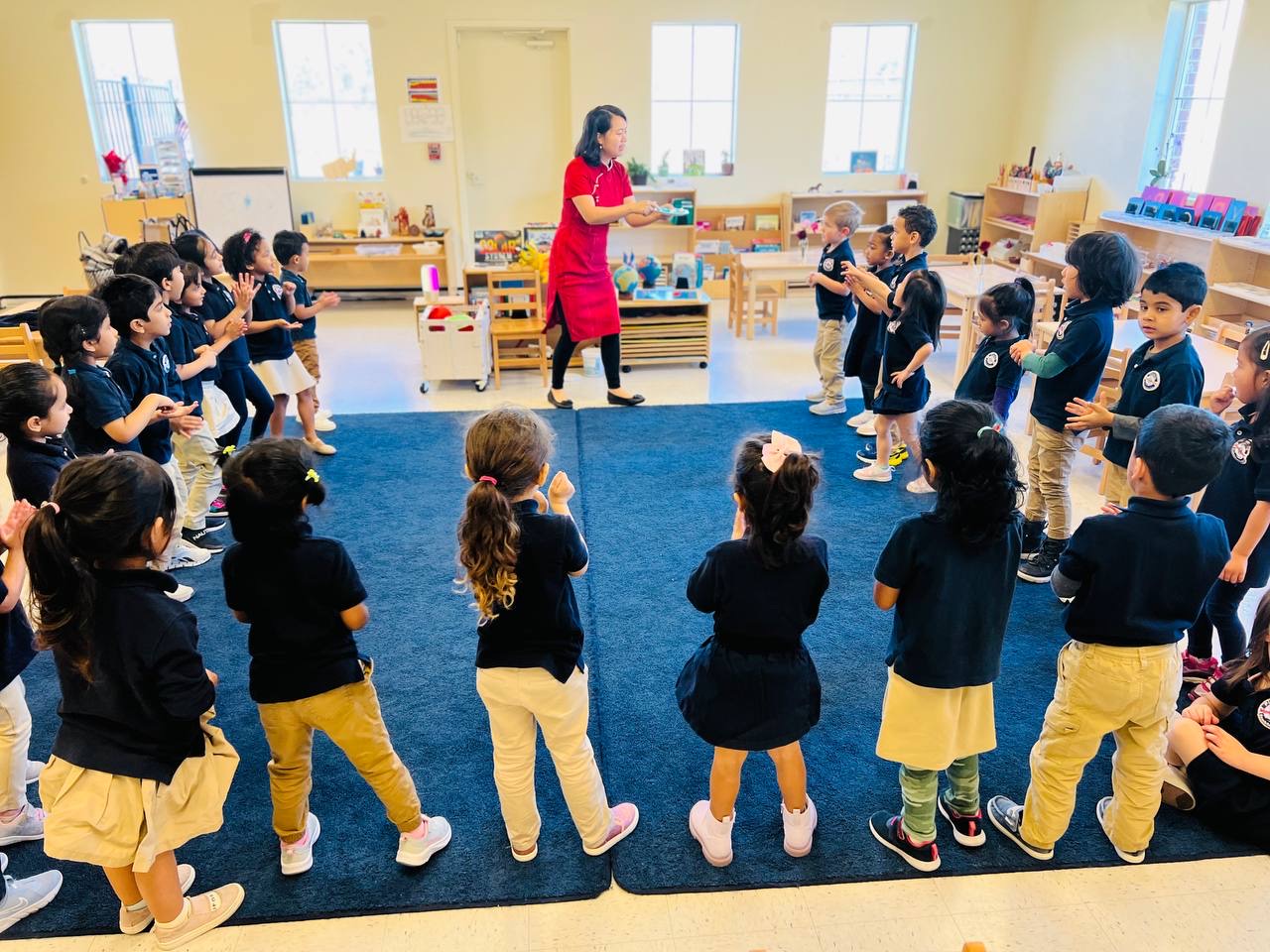
Children are often grouped in multi-year age bands, such as 3 to 6 years or 6 to 9 years. This setup mimics a real-world community and promotes peer learning.
Younger children learn from their older peers, while older children reinforce their knowledge by teaching younger classmates. This environment also enhances social skills and mutual understanding.
Emphasis on Observation
Our educators serve as careful observers, gauging each child’s interests and readiness for new information. Through observation, teachers can introduce new materials and concepts at the appropriate time for each individual.
This ensures that children are neither overwhelmed nor bored. They receive challenges tailored to their developmental level, promoting optimal growth.
Holistic Education
Montessori education does not prioritize academic growth alone. Social, emotional, physical, and cognitive development are all integral parts of the learning experience.
Children grow into well-rounded individuals who are prepared not only for future academic pursuits but also for life’s many challenges.
Cosmic Education
Especially during the elementary years, Montessori education introduces children to the interconnectedness of the universe, from the cosmos to Earth’s ecosystems.
This broad perspective fosters a sense of wonder, respect for the environment, and an understanding of one’s place in the world.
Learning as a Joyful Process
Montessori education emphasizes learning for knowledge and personal satisfaction rather than external rewards or tests.
Children cultivate a lifelong love of learning, becoming intrinsically motivated and enthusiastic learners.
Montessori Sources
- American Montessori Society (AMS)
- The Montessori Foundation
- The International Montessori Index
The Montessori Philosophy is an educational approach that emphasizes respect for the child as an eager, active learner within a structured and supportive environment. Its benefits are profound, nurturing every aspect of a child’s development while instilling values, confidence, independence, and skills that last a lifetime.