
Montessori School Near McKinney
The Montessori name has become increasingly popular over the years. As more parents look for child-centered learning environments, schools across the country have embraced Montessori-inspired practices and marketing. That’s good news in one sense because families have more educational choices than ever before.
The challenge is that not every school using the Montessori label follows authentic Montessori principles.
Many parents are surprised to learn that the word “Montessori” is not legally protected in most places. This means a school can call itself Montessori even if it only incorporates a few Montessori-inspired activities into an otherwise traditional program. As a result, finding a truly authentic Montessori school requires a little more research than simply reading a school’s website or brochure.
If you’re considering Montessori education for your child, understanding what separates an authentic Montessori school from a Montessori-inspired program can help you make a more confident decision.
Before evaluating schools, it’s helpful to understand the core principles of Montessori education. Authentic Montessori programs are built around the belief that children learn best through hands-on exploration, self-directed activity, and carefully prepared environments that encourage independence.
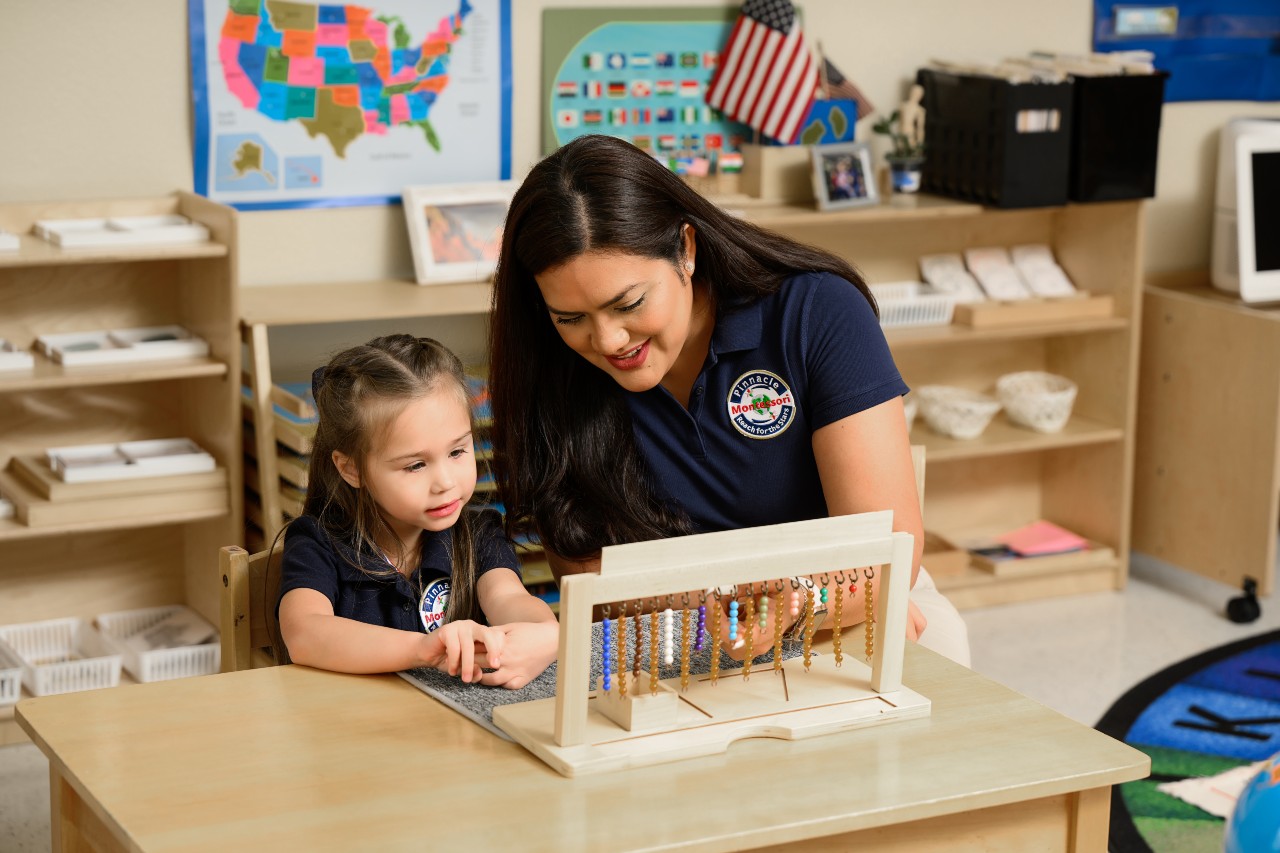
In a true Montessori classroom, children are active participants in their learning. They work with specialized materials, make choices within established boundaries, and progress at a pace that reflects their individual development. Teachers act as guides rather than traditional lecturers, observing students and introducing lessons when children are ready.
Without a basic understanding of these principles, it can be difficult to determine whether a school is genuinely Montessori or simply using the name.
One of the strongest indicators of an authentic Montessori school is the training of its educators.
Montessori teaching requires specialized preparation that goes far beyond traditional teacher education programs. Certified Montessori teachers learn how to observe children, present materials correctly, and guide learning according to Montessori philosophy.
When visiting a school, ask about teacher credentials. Schools should be willing to explain where their teachers received Montessori training and whether they hold certifications from recognized Montessori organizations.
Well-trained teachers are often the foundation of a successful Montessori program. Even the best classroom materials cannot replace knowledgeable educators who understand the philosophy behind them.
A classroom can reveal a great deal about a school’s approach to education.
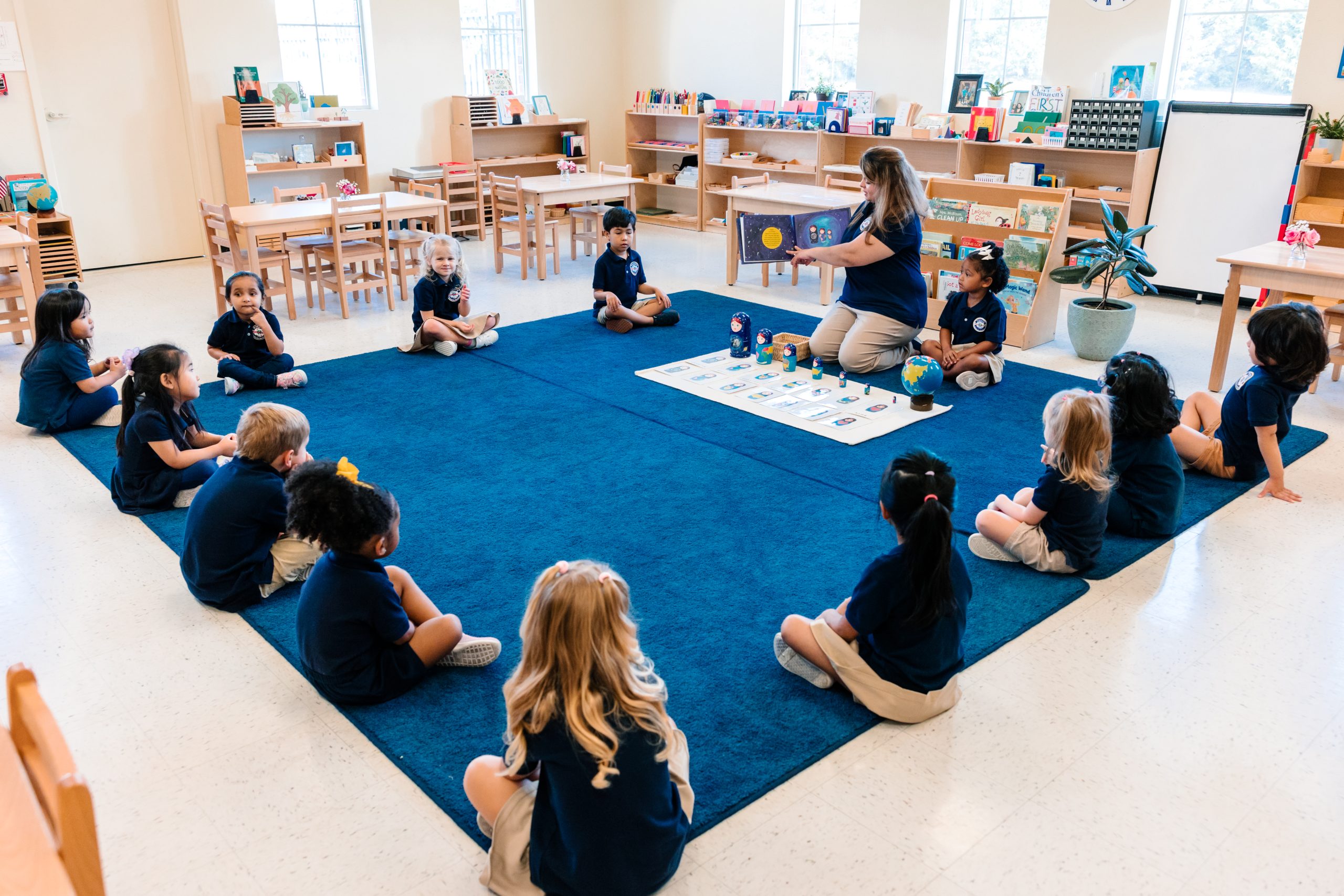
Authentic Montessori classrooms are typically calm, organized, and designed to support independence. Materials are arranged on accessible shelves, furniture is child-sized, and students are actively engaged in meaningful work.
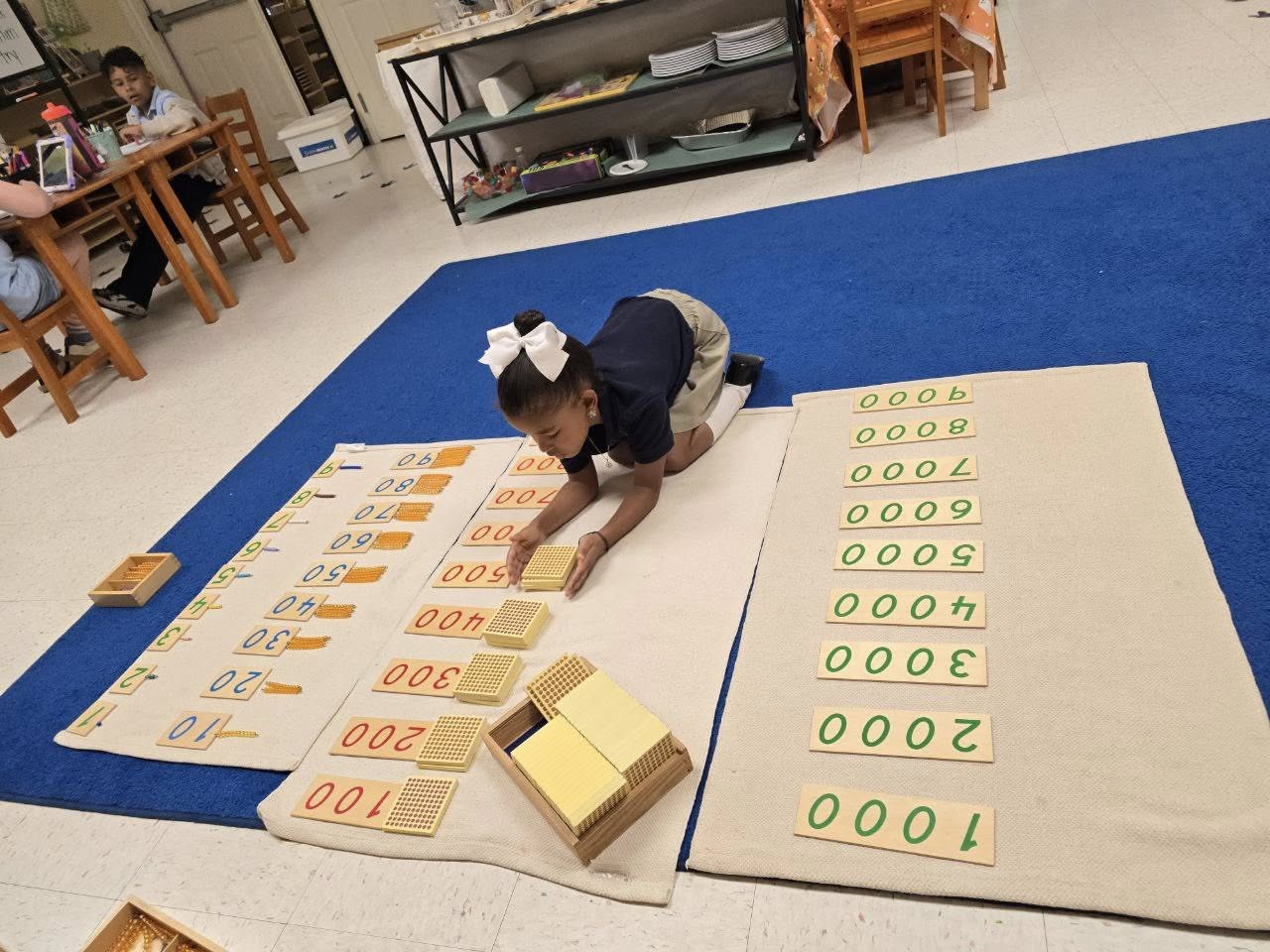
You may notice children working individually, in pairs, or in small groups rather than participating in a single teacher-led activity. Some students may be practicing math skills while others focus on language, science, or practical life activities.
The classroom should feel purposeful rather than chaotic. Children generally move freely, but they do so with a sense of responsibility and respect for their environment.
Montessori materials are one of the most recognizable features of the educational approach. These hands-on tools are carefully designed to help children explore concepts through direct experience.
During a school visit, look for materials such as the Pink Tower, Sandpaper Letters, Golden Beads, Number Rods, and other classic Montessori learning tools. While modern classrooms may include additional resources, authentic Montessori programs still rely heavily on these foundational materials.
More importantly, observe whether children are actively using them. The materials should be an integral part of daily learning rather than decorative items displayed on shelves.
Mixed-age groupings are a defining characteristic of Montessori education.
Rather than separating children strictly by age, Montessori classrooms often include students across a three-year age range. Younger children learn by observing older classmates, while older students strengthen their understanding by mentoring younger peers.
This structure encourages collaboration, patience, leadership, and a strong sense of community. If a school groups every child by exact age with little interaction across age levels, it’s worth asking how closely the program follows Montessori principles.
Traditional education often relies heavily on grades, tests, and report cards. Montessori schools generally take a different approach.
Authentic Montessori educators spend significant time observing children’s progress and documenting development across academic, social, emotional, and practical life areas. Assessment focuses on growth and mastery rather than competition with peers.
Ask how the school measures progress and communicates with parents. Their answer can provide valuable insight into whether they truly embrace Montessori philosophy or simply incorporate a few Montessori activities alongside traditional practices.
No one can offer a more honest perspective than families who already have children enrolled.
Ask parents about their experiences with the school, how teachers communicate, and whether they feel the program delivers on its promises. Listen for comments about independence, engagement, confidence, and overall child development.
Parents often notice details that may not be obvious during a short tour, making their feedback an important part of the decision-making process.
Marketing materials can be impressive, but your observations matter just as much.
When you visit a school, pay attention to how children interact with teachers, how they move through the classroom, and whether they appear genuinely engaged in their work. Authentic Montessori environments often have a unique atmosphere that is difficult to describe but easy to recognize once you see it.
Children tend to appear focused, confident, and comfortable taking ownership of their learning. That sense of independence is often one of the clearest signs that Montessori principles are being practiced consistently.
Finding an authentic Montessori school requires more than searching for the word “Montessori” in a school’s name. It involves understanding the philosophy, asking thoughtful questions, observing classrooms, and evaluating whether the program truly reflects Montessori principles.
The best Montessori schools do more than teach academic subjects. They create environments where children develop independence, curiosity, responsibility, and a lifelong love of learning. By taking the time to research and visit schools carefully, parents can find a program that provides a strong foundation for both educational success and personal growth.
In the end, an authentic Montessori school isn’t defined by its marketing. It’s defined by what children experience every day inside the classroom.