Why Montessori is the Best Approach for Nurturing Every Child’s Potential
Every parent wants to see their child thrive. The challenge is that children don’t all thrive in the same way.
Some children love working independently, while others learn through observation and exploration. Some develop academic skills quickly, while others shine through creativity, problem-solving, leadership, or communication. This diversity is what makes childhood so fascinating, but it also raises an important question: what type of educational environment allows children to develop their unique strengths rather than forcing them into a single mold?
Montessori education was built around this very idea.
Instead of expecting every child to learn the same lesson at the same pace, Montessori classrooms are designed to recognize individual development. Children are given the freedom to explore, the support to grow, and the responsibility to take an active role in their own learning. The result is an educational approach that doesn’t simply focus on academic achievement. It focuses on helping children discover what they are capable of becoming.
This commitment to nurturing the whole child is one of the reasons Montessori education continues to earn the trust of families around the world.
Every Child Learns Differently
Traditional educational systems often rely on standardization. Children of the same age are usually expected to follow similar schedules, complete similar assignments, and progress according to the same academic timeline.
While this structure works well for some students, it doesn’t always reflect the reality of child development. Children grow at different rates and often demonstrate strengths in different areas.
Montessori classrooms acknowledge these differences. Teachers observe each child’s interests, abilities, and readiness rather than assuming all students should learn in the same way. A child who is ready for advanced math concepts can move forward, while another may spend more time strengthening foundational skills without feeling rushed or left behind.
This individualized approach allows children to develop confidence because they are learning according to their own developmental needs rather than constantly comparing themselves to others.
Independence Unlocks Potential
One of the most powerful aspects of Montessori education is its emphasis on independence.
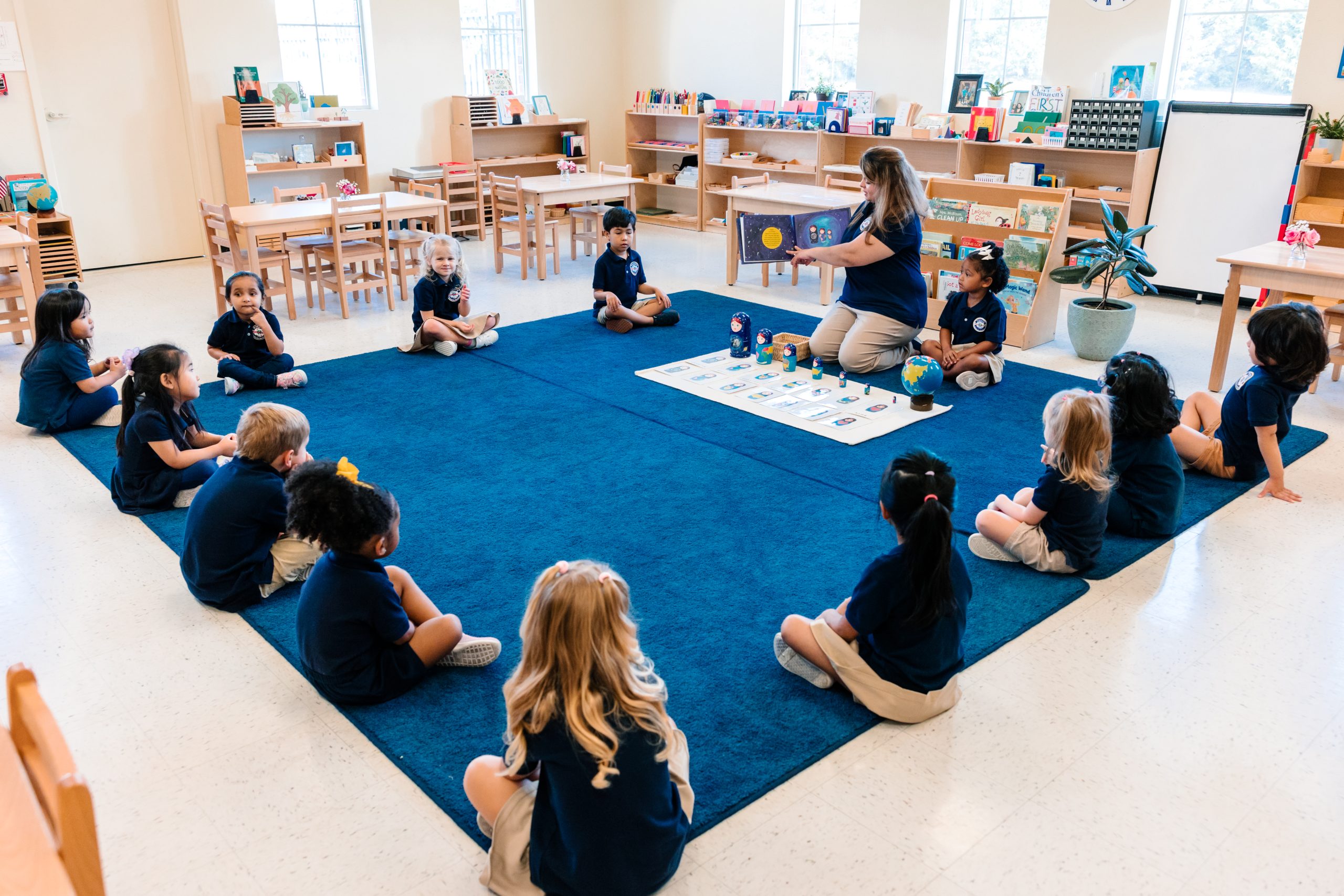
Walk into a Montessori classroom and you’ll see children making choices, selecting activities, organizing materials, and completing tasks with minimal adult intervention. These experiences may seem simple, but they help children develop a mindset that carries into every area of learning.
When children learn to trust themselves, they become more willing to take risks, solve problems, and explore new challenges. They begin to understand that they are capable of figuring things out rather than waiting for someone else to provide the answers.
Potential often grows when children are given opportunities to use it. Montessori education creates those opportunities every day.
Learning Through Experience Creates Deeper Understanding
Children learn best when they are actively involved in the learning process.
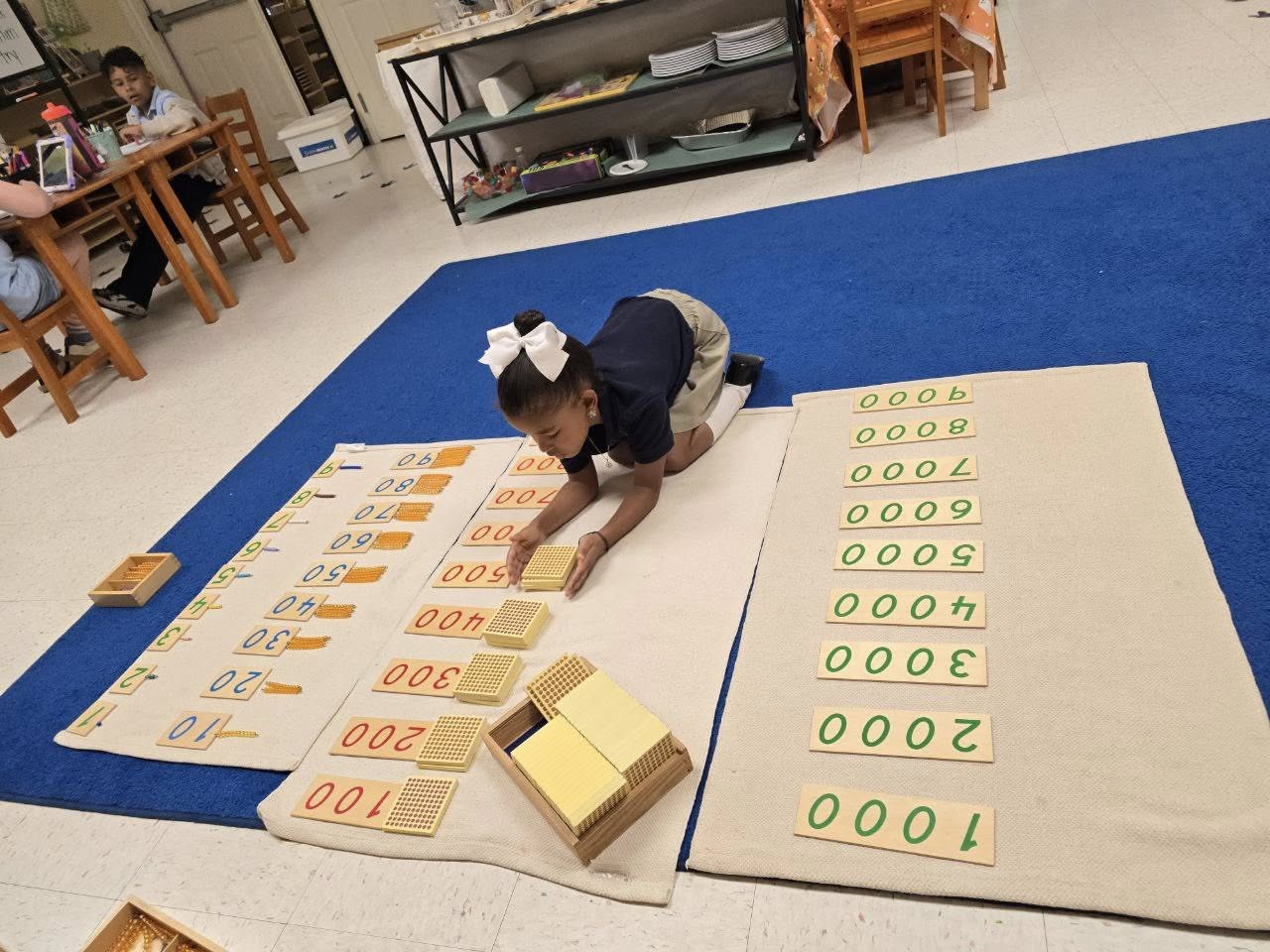
Montessori classrooms replace passive learning with hands-on exploration. Whether children are working with math materials, language tools, science activities, or practical life exercises, they are interacting directly with concepts rather than simply hearing about them.
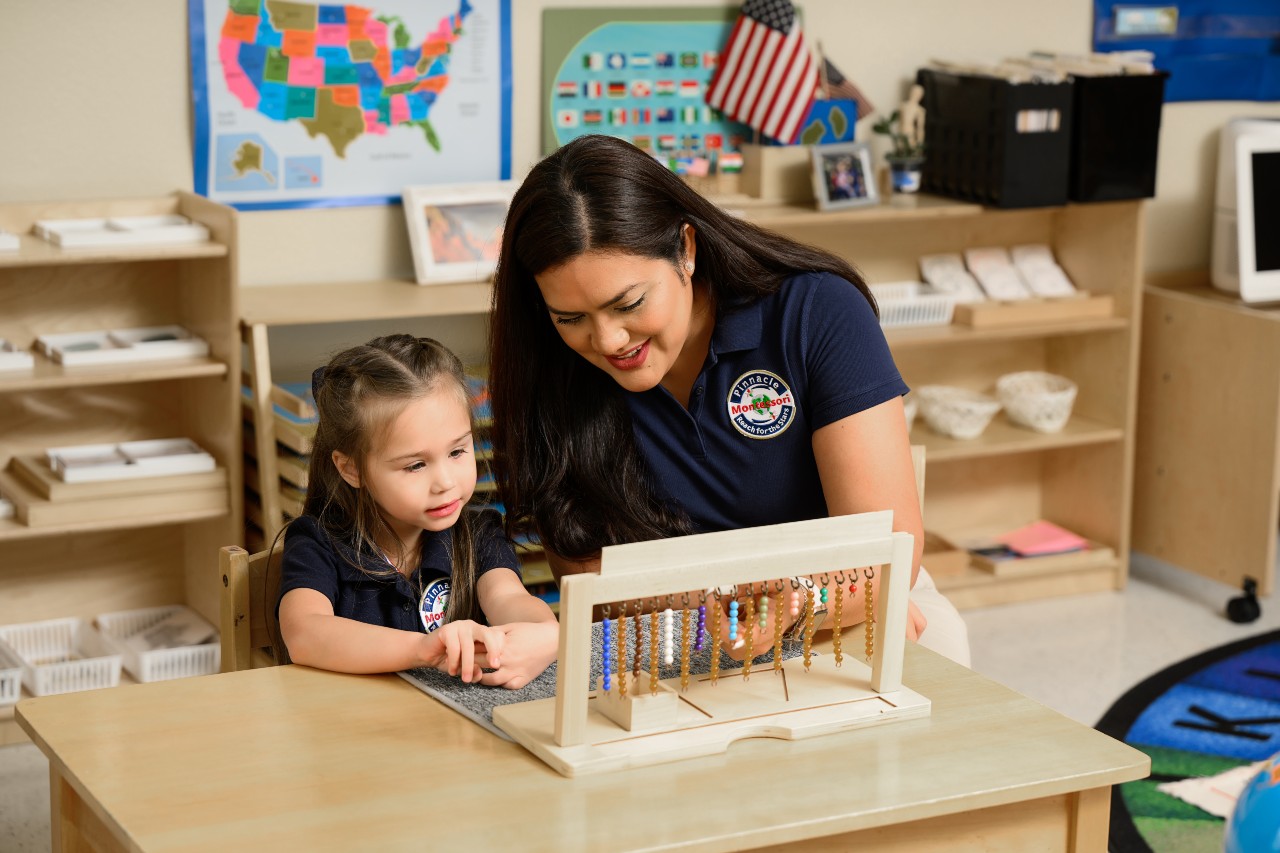
Imagine trying to explain the concept of quantity to a young child. A worksheet may help, but physically counting beads, arranging number rods, and seeing mathematical relationships firsthand often creates a much stronger understanding.
These experiences make learning memorable because children are discovering ideas for themselves. Instead of memorizing information temporarily, they develop knowledge through direct experience.
Confidence Grows Through Real Achievement
Children develop genuine confidence when they accomplish meaningful tasks.
In Montessori environments, children are trusted with responsibilities that challenge them while remaining appropriate for their age. They learn how to care for their classroom, complete projects independently, help classmates, and solve everyday problems.
Each successful experience reinforces an important message: “I can do this.”
This type of confidence differs from praise-based confidence. It comes from competence rather than external approval. Children begin to believe in their abilities because they have repeatedly demonstrated those abilities to themselves.
Over time, this self-belief becomes a powerful driver of growth and achievement.
Social and Emotional Growth Matters Too
Academic success is important, but it is only one part of a child’s development.
Children also need to learn how to communicate, cooperate, manage emotions, and build healthy relationships. These skills often play a significant role in long-term success, both personally and professionally.
Montessori classrooms naturally support social and emotional growth through mixed-age learning communities and collaborative experiences. Younger children learn from older peers, while older students develop patience and leadership by helping others.
Daily interactions encourage empathy, respect, and problem-solving. Children learn how to work through disagreements, listen to different perspectives, and contribute positively to their environment.
These lessons are difficult to teach through textbooks alone. They are learned through experience.
Curiosity Becomes a Lifelong Habit
Young children are naturally curious. They ask questions constantly, investigate their surroundings, and seek to understand how things work.
Unfortunately, educational environments that focus too heavily on memorization and standardized outcomes can sometimes diminish that natural curiosity.
Montessori education takes the opposite approach. Curiosity is encouraged and celebrated. Children are given time to explore topics that interest them, ask questions, and pursue meaningful learning experiences.
This approach helps children develop intrinsic motivation. They learn because they want to understand, not simply because someone tells them to. That distinction may be one of the most valuable gifts education can provide.
A curious child often becomes a lifelong learner.
Preparing Children for a Changing World
The future will require more than academic knowledge alone.
As technology evolves and industries change, qualities such as adaptability, creativity, critical thinking, communication, and resilience are becoming increasingly valuable. Many of these skills are developed naturally within Montessori environments.
Children learn how to approach challenges independently, work with others, think creatively, and adapt when things don’t go as planned. These abilities help prepare them not only for future education but also for the complexities of adult life.
Rather than focusing solely on what children know today, Montessori education helps prepare them for what they may need tomorrow.
Final Thoughts
Montessori education stands out because it recognizes something fundamental about childhood: every child has unique strengths, interests, and potential. Instead of trying to fit children into a predetermined model, it creates an environment where those qualities can emerge and develop naturally.
Through independence, hands-on learning, meaningful responsibility, social development, and respect for individual growth, Montessori classrooms help children become confident learners and capable individuals. The goal is not simply academic success. It is helping children discover their abilities, trust themselves, and develop a lifelong love of learning.
When children are given the freedom to explore, the support to grow, and the opportunity to learn through experience, their potential often exceeds what anyone imagined possible. That is why so many families view Montessori education as one of the most effective approaches for nurturing the whole child.