
Montessori School Near McKinney
Walk into a Montessori classroom, and you might notice something surprising. Children aren’t all doing the same activity at the same time. One child may be carefully pouring water between two pitchers, another might be building words with movable letters, while someone else is working with colorful math materials on a floor mat.
At first glance, these activities can look like simple play. In reality, each one has a purpose. Montessori activities are carefully designed to help children develop academic skills, independence, concentration, coordination, and confidence through hands-on learning.
Rather than relying heavily on worksheets or teacher-led instruction, Montessori classrooms encourage children to learn by doing. The materials invite exploration, allowing children to discover concepts for themselves instead of simply memorizing information. Understanding some of the most common Montessori activities can help parents see how this unique approach supports early childhood development.
Practical life activities are often the first Montessori lessons children encounter. These tasks focus on everyday skills that adults may take for granted but that are fascinating and meaningful to young children.
Activities can include pouring water, spooning beans from one bowl to another, buttoning frames, sweeping floors, washing tables, polishing objects, or arranging flowers. While these exercises may seem simple, they help children develop fine motor skills, hand-eye coordination, concentration, and independence.
Perhaps most importantly, practical life activities help children feel capable. When a child learns to pour their own drink or clean up a spill without assistance, they gain a sense of responsibility and confidence that carries into other areas of learning.
Young children learn about the world through their senses. Montessori sensorial materials are designed to help them organize and refine what they see, hear, touch, smell, and experience.
One of the most recognizable Montessori materials is the Pink Tower, a set of ten pink cubes that vary in size. Children stack the cubes from largest to smallest, developing visual discrimination and an early understanding of dimensions. Other sensorial activities include color tablets, sound cylinders, geometric solids, and texture boards.
These materials may appear simple, but they lay the groundwork for future learning. By recognizing differences in size, shape, color, and texture, children build observation skills that later support subjects such as mathematics, science, and language.
Montessori language activities help children develop communication skills in a natural and engaging way. Instead of rushing into reading, the approach focuses on building a strong foundation through listening, speaking, vocabulary development, and sound recognition.
Children often begin with activities that introduce letter sounds rather than letter names. Sandpaper letters allow them to trace the shape of each letter while hearing its sound, engaging multiple senses at once. As their skills grow, they move on to activities such as the movable alphabet, which helps them build words before they are able to write them independently.
Storytelling, conversation, and reading aloud also play important roles. These experiences expand vocabulary and encourage a love of language that supports future reading and writing success.
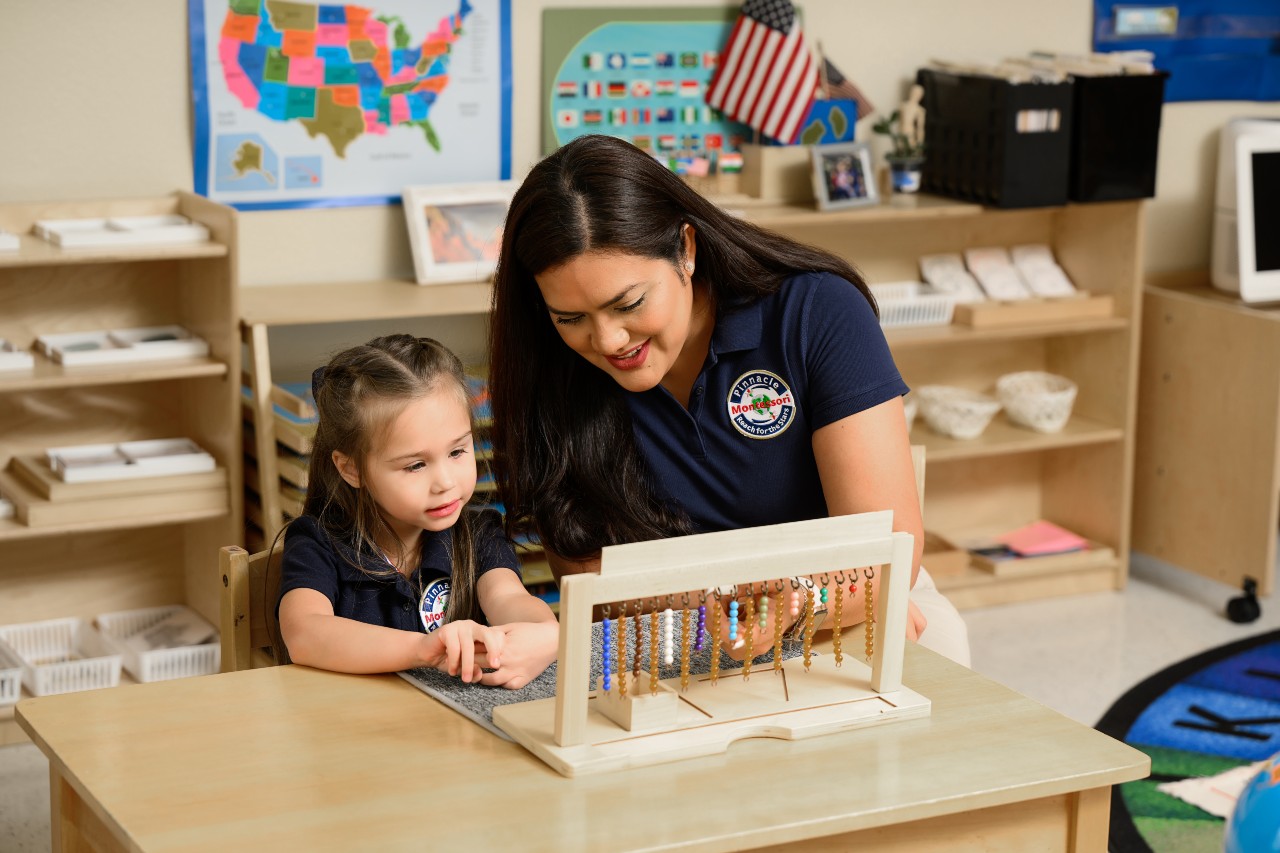
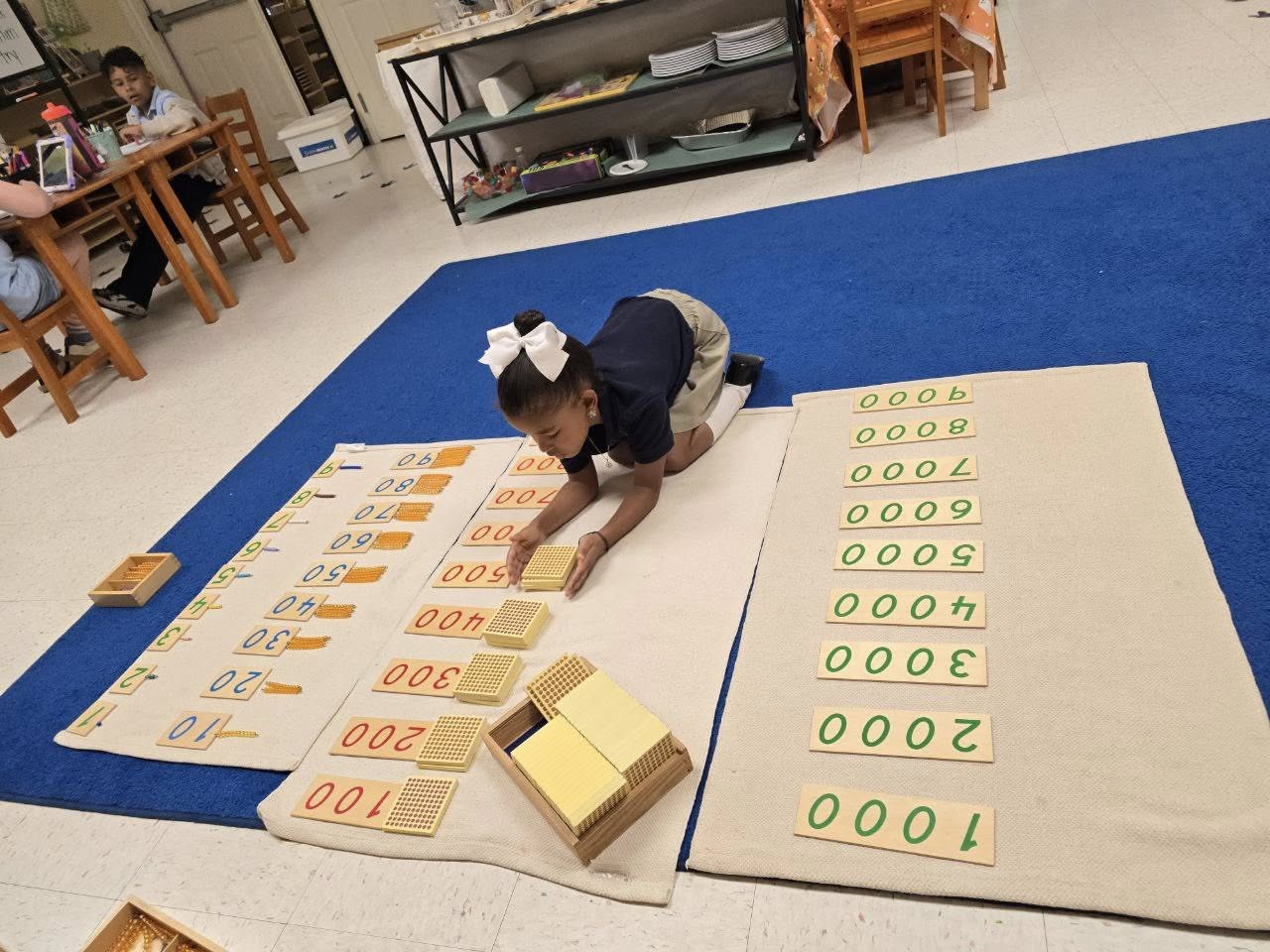
Montessori math materials are known for making abstract concepts feel concrete. Instead of simply memorizing numbers, children can see and physically manipulate mathematical ideas.
For example, number rods help children understand quantity by connecting numbers to physical lengths. Golden bead materials introduce concepts such as units, tens, hundreds, and thousands in a way that children can touch and explore. As students progress, they use increasingly advanced materials to learn addition, subtraction, multiplication, and division.
This hands-on approach often helps children develop a deeper understanding of mathematics because they experience concepts directly before moving to abstract calculations.
Montessori education goes beyond reading and math. Cultural activities introduce children to geography, science, history, music, art, and the natural world.
A child may work with puzzle maps to learn about continents and countries, examine plant specimens, explore the life cycle of a butterfly, or study different animals and habitats. These activities encourage curiosity and help children develop an appreciation for the diversity of the world around them.
Rather than presenting information as isolated facts, Montessori classrooms often connect learning to real-life experiences. This approach helps children see how different subjects relate to one another and fosters a lifelong interest in discovery.
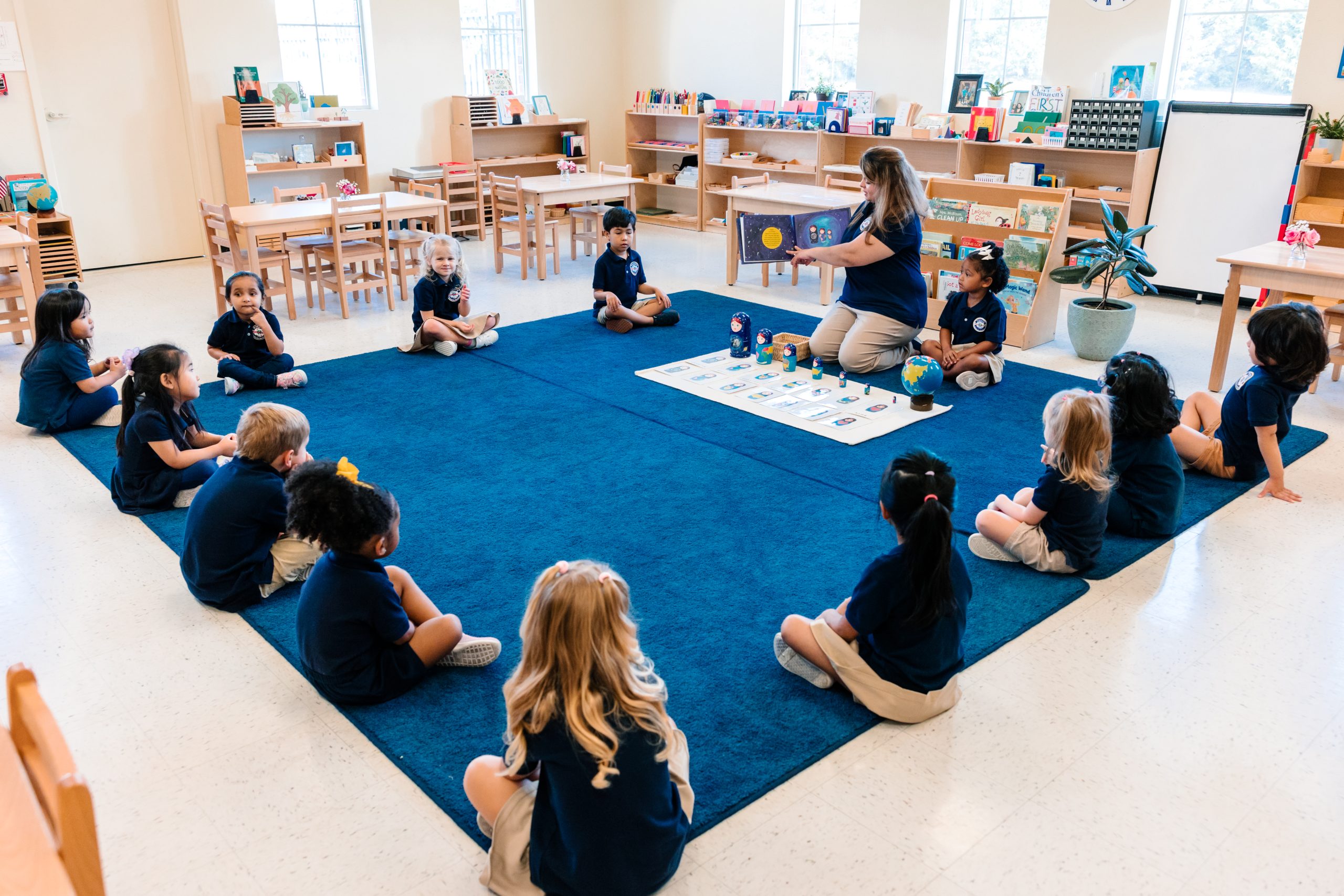
One unique aspect of Montessori education is its emphasis on social development. Grace and courtesy lessons teach children how to interact respectfully with others and navigate everyday situations.
These lessons might include greeting visitors, waiting for a turn, offering help to a classmate, using polite language, or resolving conflicts peacefully. Teachers often model these behaviors and give children opportunities to practice them throughout the day.
Over time, children learn that respect, kindness, and consideration are just as important as academic achievement. These skills contribute to a positive classroom environment and support healthy relationships beyond school.
Montessori activities are more than educational exercises. They are tools that help children build independence, confidence, concentration, and a genuine love of learning. Each activity has a clear purpose, even when it looks simple on the surface.
What makes the Montessori approach distinctive is that children are active participants in their own learning. They aren’t simply receiving information. They’re exploring, experimenting, and discovering concepts through direct experience. This process often leads to deeper understanding and stronger engagement.
The most common Montessori activities may not look impressive at first glance. Pouring water, stacking cubes, tracing letters, or arranging objects can seem ordinary to adults. Yet these carefully designed experiences help children develop essential skills that support both academic success and personal growth.
By encouraging hands-on exploration and independence, Montessori activities allow children to learn in a way that feels natural. They build confidence one small accomplishment at a time, creating a foundation that can benefit them long after they leave the classroom.