Montessori School Near McKinney
Choosing a school for your child is one of the most important decisions you’ll make as a parent. With so many educational options available today, many families find themselves comparing Montessori schools and traditional public schools to determine which environment is the best fit for their child.
While both educational approaches aim to help children learn and grow, they do so in very different ways. Understanding these differences can help parents make a more informed decision based on their child’s personality, learning style, and developmental needs.
The most significant difference between Montessori and public schools is how children learn.
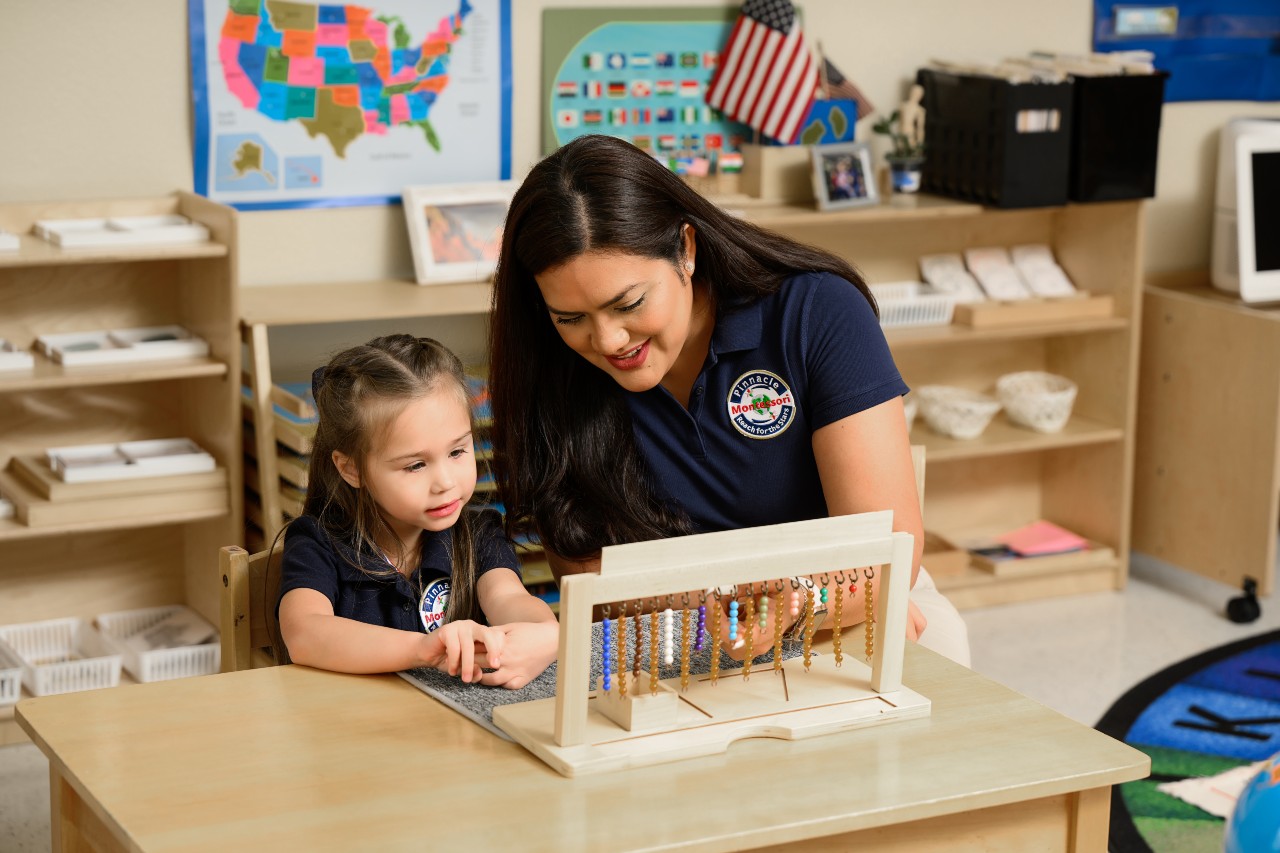
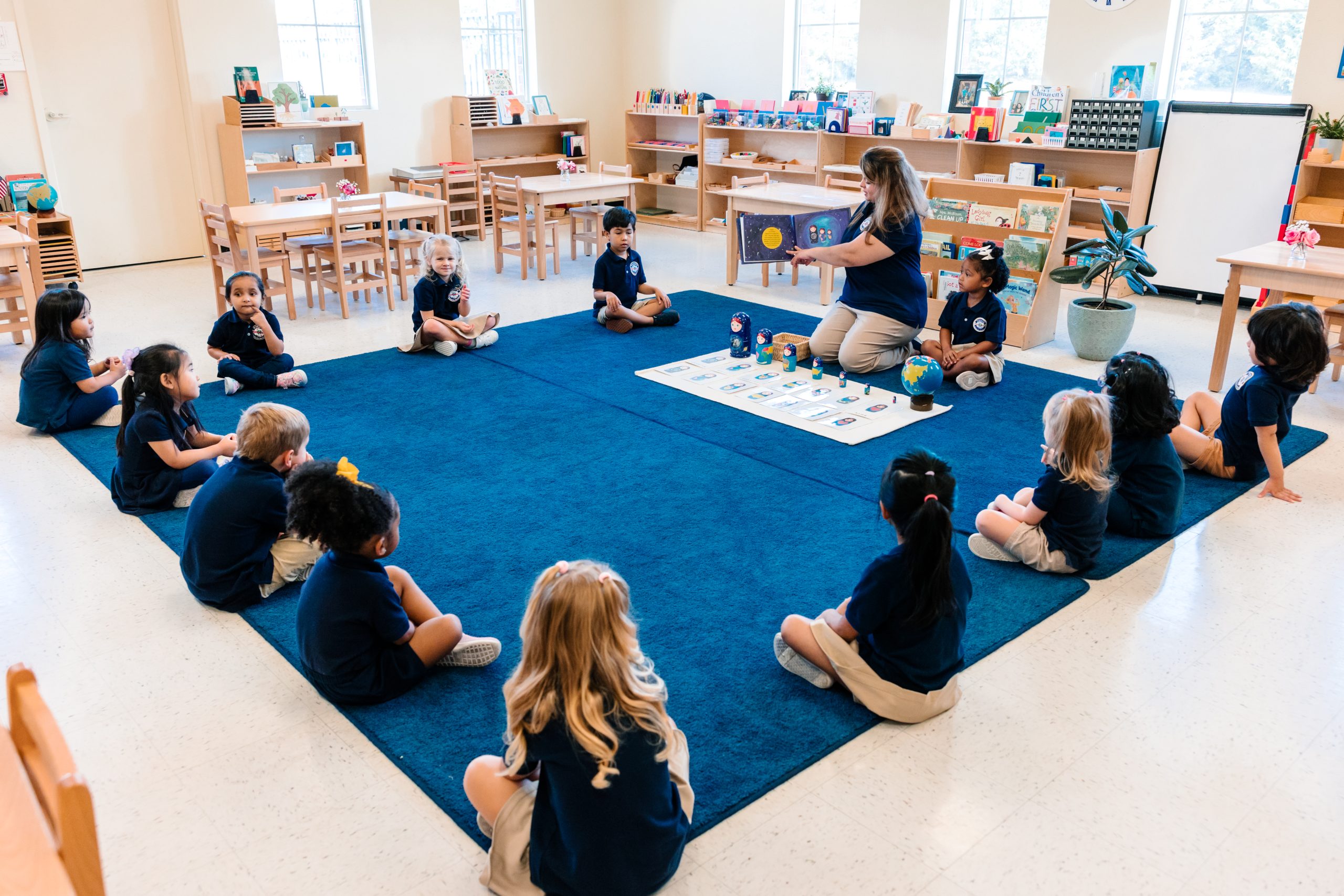
In a Montessori classroom, learning is centered around the child. Students are encouraged to explore concepts through hands-on activities and move through lessons at their own pace. Teachers serve as guides, introducing new materials and lessons when a child demonstrates readiness and interest.
In a traditional public school setting, learning is typically teacher-led. Students follow a standardized curriculum and work through lessons according to grade-level expectations. The teacher directs instruction for the entire class, and students generally learn the same material at the same time.
Neither approach is inherently right or wrong—they simply offer different educational experiences.
Every child develops differently. Some children excel in reading at an early age, while others may demonstrate stronger interests in mathematics, science, art, or hands-on activities.
Montessori education embraces these differences by allowing children to progress according to their individual readiness. A child who masters a concept quickly can move forward, while another child can spend additional time developing understanding without feeling rushed.
In public schools, teachers work hard to meet the needs of all students, but they must also follow curriculum timelines and academic standards established for each grade level.
Walk into a Montessori classroom, and you may immediately notice something different. Children are actively engaged in a variety of activities, working independently, in small groups, or alongside a teacher.
The classroom is carefully prepared with materials displayed on accessible shelves, allowing children to choose meaningful work that supports their learning goals.
Public school classrooms often follow a more structured daily schedule, with designated times for subjects such as reading, math, science, and social studies. Whole-group instruction and teacher-led lessons are more common.
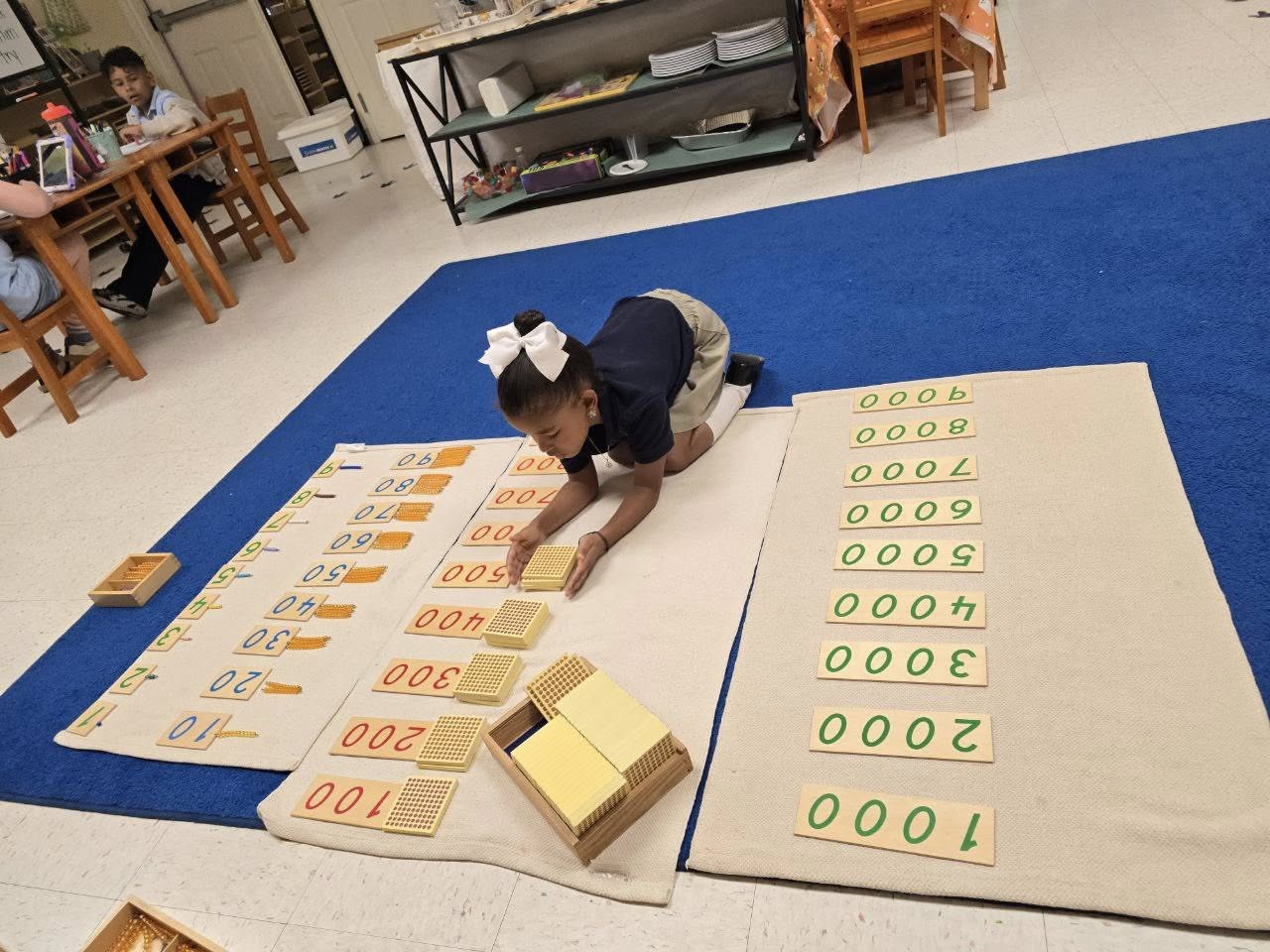
Montessori education is built around hands-on learning experiences. Children use specially designed materials that allow them to explore concepts through touch, movement, and discovery.
For example, rather than memorizing mathematical concepts from a worksheet, children may use physical materials to understand quantities, patterns, and operations in a concrete way before moving to abstract thinking.
Public schools may incorporate hands-on activities as well, but instruction often relies more heavily on textbooks, worksheets, digital resources, lectures, and classroom discussions.
One of the unique features of Montessori education is the mixed-age classroom.
Children typically learn in groups spanning three years, creating a community where younger students learn from older peers and older students develop leadership skills by mentoring younger classmates.
This structure encourages collaboration, patience, empathy, and confidence.
Public schools generally group students by age and grade level, with children advancing to a new classroom each year.
Montessori classrooms are intentionally designed to help children become independent and responsible.
Children are encouraged to make choices, care for their environment, manage their work, and solve problems independently. Practical Life activities, such as cleaning, organizing, preparing snacks, and caring for classroom materials, help children build confidence and self-reliance.
Public schools also teach responsibility, but daily routines and learning activities are typically more structured and directed by the teacher.
Another difference lies in how student progress is evaluated.
Montessori educators rely heavily on observation, individual progress tracking, work samples, and mastery of skills. The focus is on growth, understanding, and personal development rather than competition.
Public schools often use grades, tests, quizzes, report cards, and standardized assessments to measure student achievement and academic progress.
Academic success is important, but so is emotional well-being.
Montessori education places a strong emphasis on social and emotional development. Children learn conflict resolution, communication skills, empathy, respect, and cooperation through daily interactions and Grace and Courtesy lessons.
While public schools increasingly incorporate social-emotional learning programs, academic requirements often take center stage due to curriculum standards and testing expectations.
The truth is that there is no single educational model that works perfectly for every child.
Some children thrive in the structure and routine of a traditional public school environment. Others flourish in a Montessori setting where they have greater freedom, individualized learning opportunities, and hands-on experiences.
The best choice is the one that aligns with your child’s unique personality, learning style, and developmental needs.
As a parent, it’s important to visit schools, ask questions, observe classrooms, and consider where your child will feel most confident, supported, and inspired to learn.
Although Montessori schools and public schools take different paths, they ultimately share the same goal: helping children develop the knowledge, skills, and confidence they need to succeed.
Whether your child learns through a Montessori environment or a traditional classroom, what matters most is that they feel encouraged, valued, and excited about learning. When children develop confidence, curiosity, and a love of discovery, they are building a foundation that will benefit them for years to come.