The Montessori Method: A Unique Approach to Early Childhood Education
Walk into a traditional classroom and you’ll often find children following the same lesson, completing the same assignment, and moving through the day according to a teacher-directed schedule. Walk into a Montessori classroom, and the experience can feel very different.
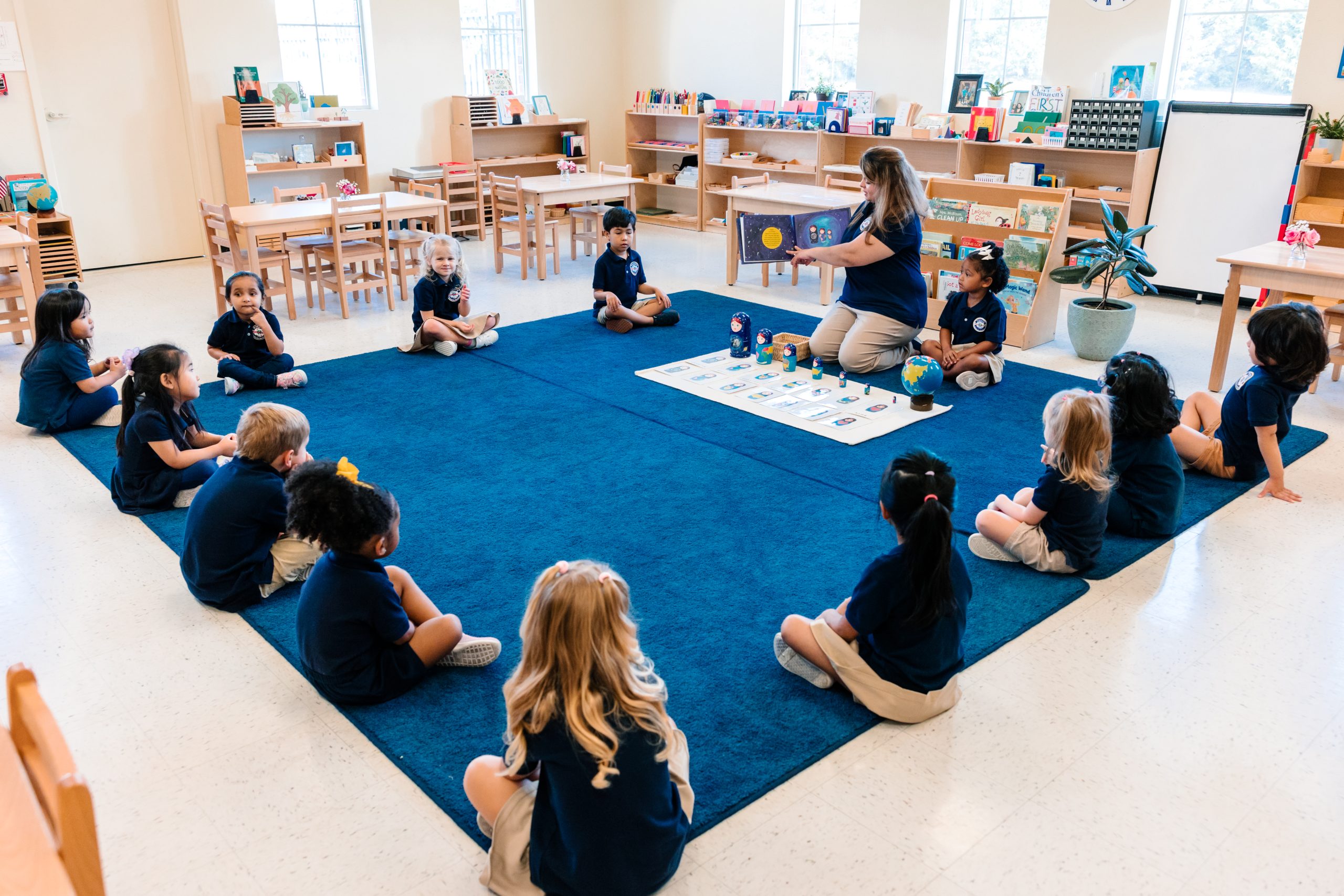
Some children may be working with math materials. Others might be practicing reading, caring for plants, or completing hands-on science activities. Instead of rows of desks and constant instruction, you’ll find an environment designed to encourage exploration, independence, and purposeful learning.
This difference isn’t accidental. It’s the result of a carefully developed educational philosophy known as the Montessori Method.
Created more than a century ago by Dr. Maria Montessori, the Montessori Method remains one of the most recognized approaches to early childhood education. Its focus on child-led learning, hands-on experiences, and whole-child development continues to attract families seeking an alternative to traditional educational models.
Who Was Maria Montessori?
The Montessori Method was developed by Dr. Maria Montessori, an Italian physician and educator who became one of the first women in Italy to earn a medical degree.
While working with children in the early 1900s, Montessori began observing how they learned and interacted with their environment. She noticed that children were naturally curious and capable of remarkable concentration when given meaningful activities and the freedom to explore.
These observations led her to challenge many of the educational practices of her time. Instead of viewing children as passive learners who needed constant instruction, she believed they were active participants in their own development.
Her ideas eventually evolved into the Montessori Method, which continues to influence schools around the world today.
The Child Is at the Center of Learning
One of the defining characteristics of the Montessori Method is its focus on the child rather than the curriculum.
Traditional educational systems often require all students to learn the same material at the same pace. Montessori education recognizes that children develop differently and may be ready for certain concepts at different times.
In a Montessori classroom, teachers carefully observe each child’s interests, abilities, and developmental needs. Lessons are introduced when children are ready rather than according to a rigid schedule.
This individualized approach allows children to build confidence while progressing at a pace that feels natural to them.
Learning Through Hands-On Experiences
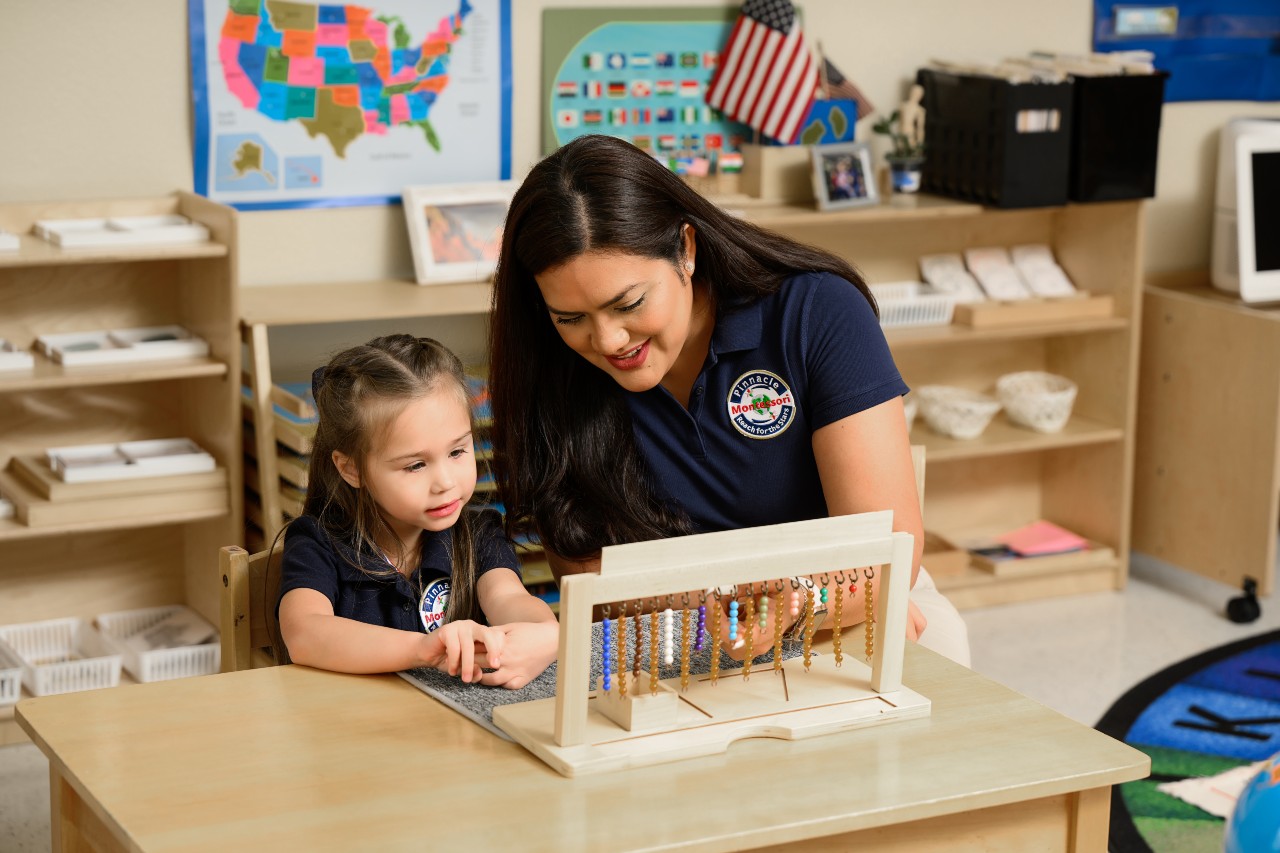
Montessori education places a strong emphasis on learning through direct experience. Instead of relying heavily on lectures or worksheets, children interact with carefully designed materials that help them explore concepts independently.
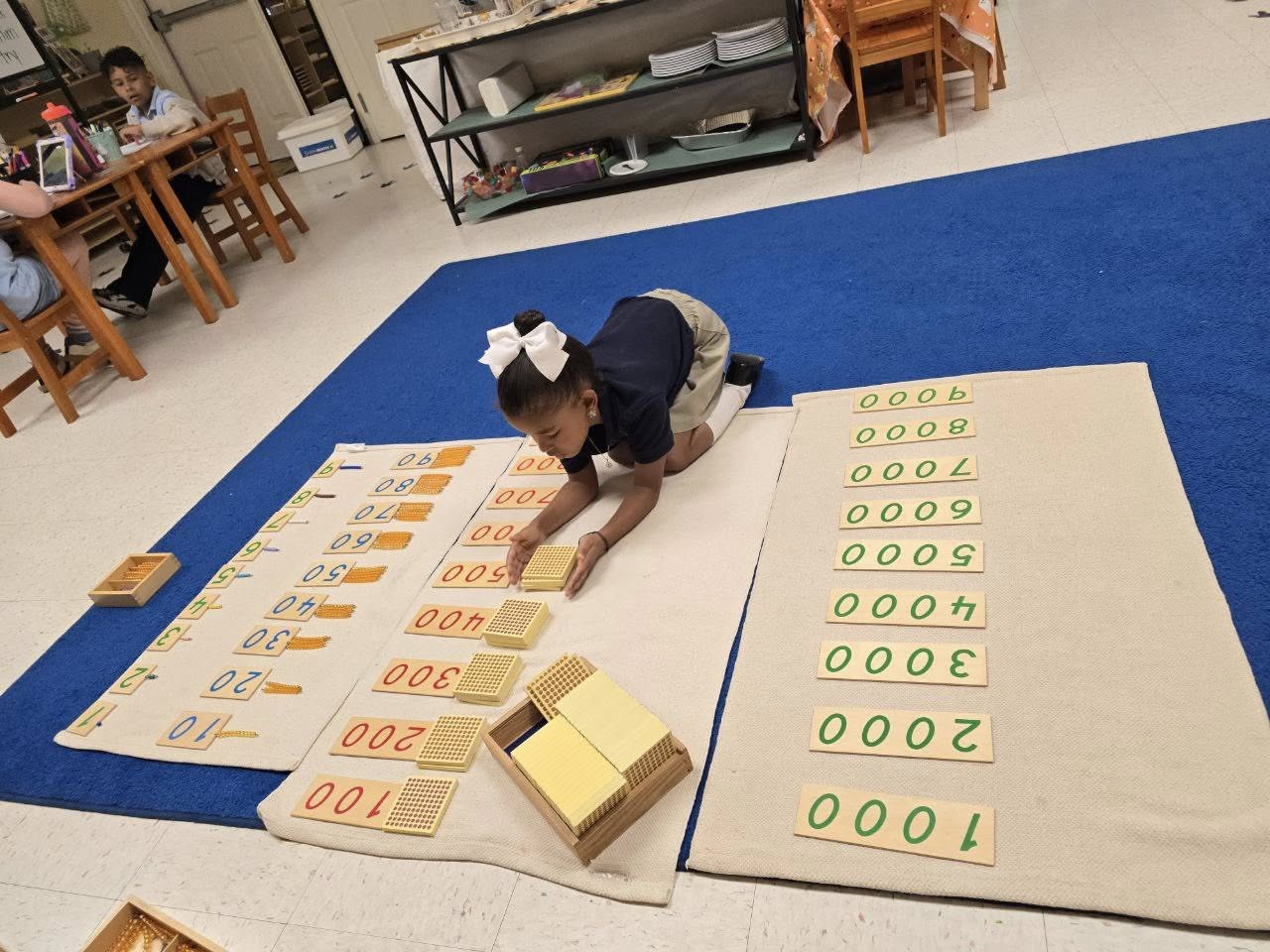
A child learning mathematics may use beads, rods, and counters to understand quantities and number relationships. Language lessons often involve tracing letters, building words, and connecting sounds to symbols through tactile activities.
These materials transform abstract concepts into concrete experiences. Children don’t simply memorize information. They see it, touch it, and work with it until understanding develops naturally.
This hands-on approach often leads to deeper engagement and stronger retention of information.
Encouraging Independence
Independence is one of the core goals of Montessori education.
From an early age, children are encouraged to complete tasks on their own, make decisions, and take responsibility for their environment. They learn practical skills such as cleaning up after activities, organizing materials, serving snacks, and caring for classroom spaces.
These responsibilities may seem simple, but they help children develop confidence and self-reliance. Instead of constantly depending on adults for guidance, children begin to trust their own abilities and take ownership of their learning.
Over time, this independence becomes one of the most valuable outcomes of the Montessori experience.
The Importance of the Prepared Environment
Montessori classrooms are carefully designed to support children’s development.
Everything within the environment has a purpose. Furniture is child-sized, materials are organized and accessible, and learning spaces are arranged to encourage exploration and concentration. Children can move freely throughout the classroom and choose activities that match their interests and developmental needs.
This type of environment allows children to function independently while promoting order, responsibility, and respect for shared spaces.
Maria Montessori often described the environment as a teacher in itself, helping guide learning through thoughtful design and organization.
Mixed-Age Classrooms Promote Collaboration
Another unique feature of the Montessori Method is the use of mixed-age classrooms.
Rather than separating children strictly by age, Montessori programs often group students within a three-year age range. This creates opportunities for younger children to learn through observation while older students reinforce their knowledge by helping others.
The classroom becomes more like a community than a collection of individuals working independently.
Children learn patience, cooperation, leadership, and empathy through daily interactions. They discover that learning is not a competition but a shared experience where everyone contributes and grows together.
Focusing on the Whole Child
The Montessori Method extends beyond academics. While reading, writing, mathematics, and science remain important, equal attention is given to social, emotional, physical, and practical development.
Children learn how to communicate respectfully, solve problems, manage responsibilities, and work collaboratively with others. They develop concentration, resilience, and self-discipline alongside academic skills.
This holistic approach reflects Montessori’s belief that education should prepare children for life, not simply for exams or future grade levels.
By supporting multiple areas of development, Montessori education aims to help children become capable and well-rounded individuals.
Why the Montessori Method Remains Relevant Today
Although the Montessori Method was developed more than 100 years ago, many of its principles feel especially relevant in today’s world.
Modern parents and educators increasingly recognize the importance of creativity, critical thinking, adaptability, and emotional intelligence. These qualities are difficult to develop through memorization alone but are central to the Montessori approach.
At a time when children face constant distractions and growing academic pressure, Montessori education offers an environment that values curiosity, independence, and meaningful learning experiences.
Its continued popularity suggests that many families still find value in these timeless principles.
Final Thoughts
The Montessori Method is more than a teaching technique. It is a philosophy that views children as capable, curious, and naturally motivated learners. By emphasizing hands-on experiences, independence, individualized learning, and whole-child development, Montessori education provides a unique approach to early childhood learning.
While no educational model is perfect for every child, the Montessori Method has helped generations of students develop confidence, responsibility, and a lifelong love of learning. Its enduring influence serves as a reminder that when children are given the freedom to explore and the support to grow, remarkable things can happen.