
Montessori School Near McKinney
When parents begin looking for childcare options, they often come across two common choices: Montessori schools and daycares.
At first glance, they can seem similar. Both provide care for young children. Both offer opportunities for learning, play, and social interaction.
But once you step inside, the differences become clear.
A Montessori school is built around a specific educational philosophy. A daycare is primarily designed to provide safe supervision and care while parents work.
Neither option is automatically better. The right choice depends on your child’s needs, your family’s goals, and what you’re hoping your child will gain from their early years.
Let’s take a closer look.
A Montessori school follows the teaching methods developed by Dr. Maria Montessori more than a century ago.
The approach is based on a simple idea: children learn best when they are actively involved in their own education.
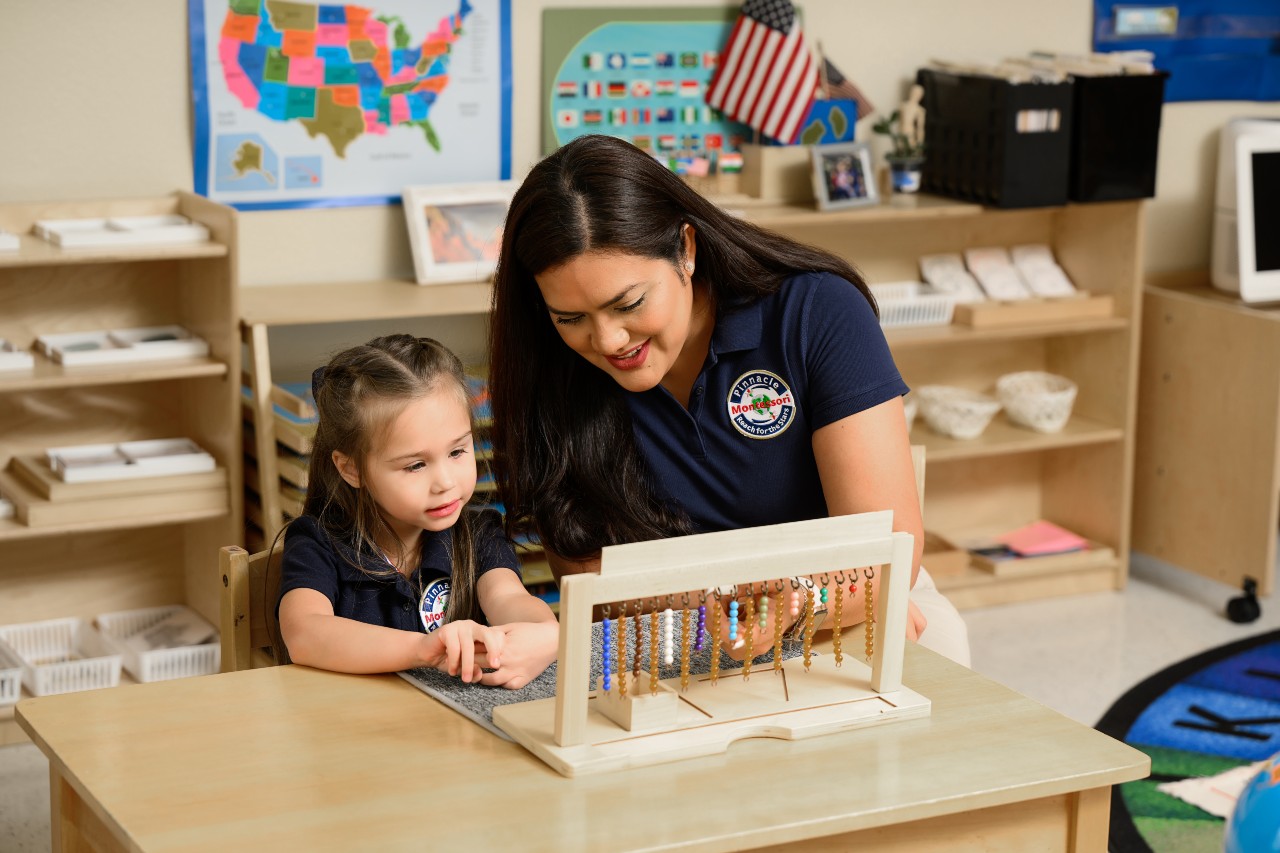
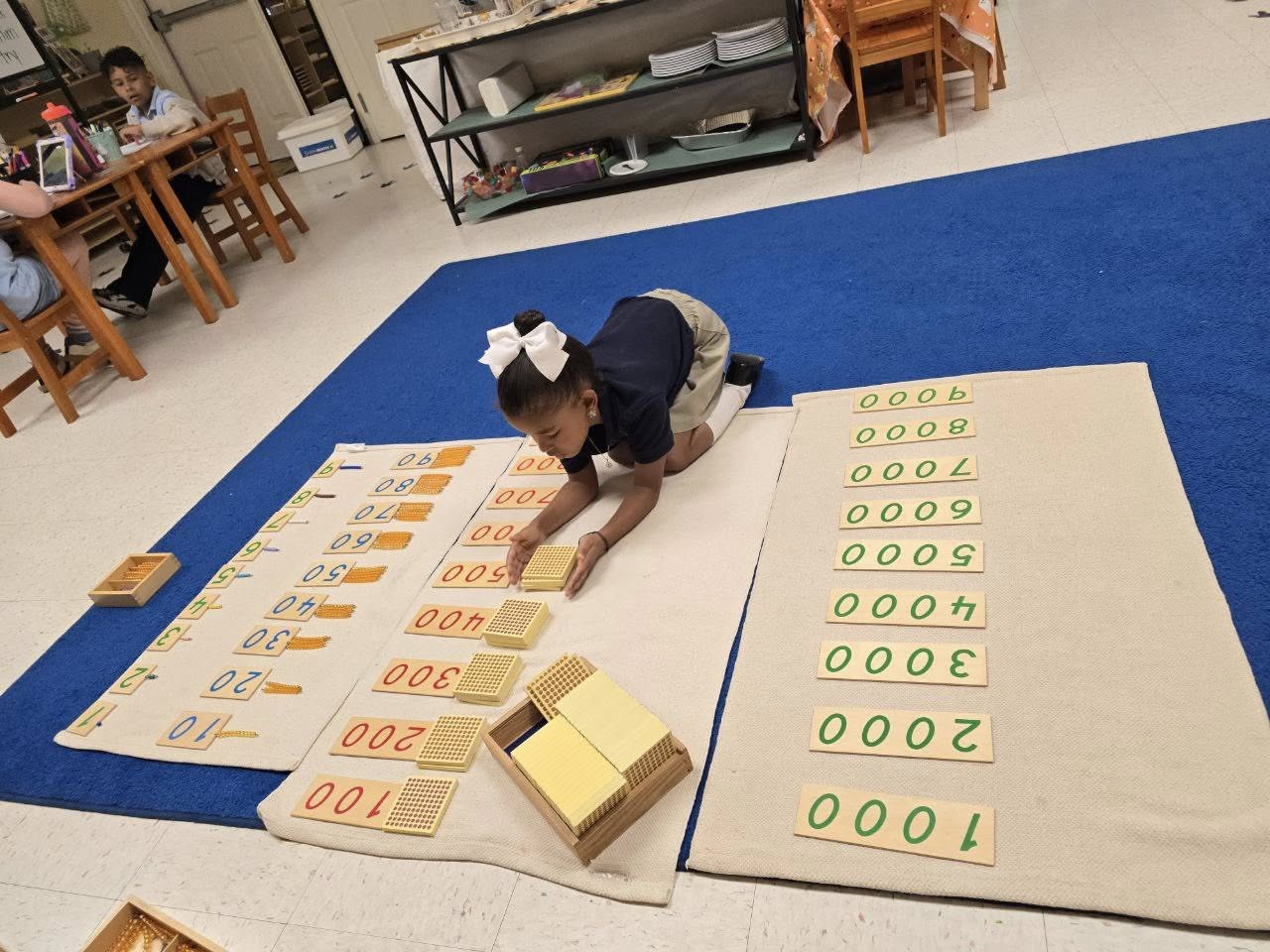
Instead of sitting through long teacher-led lessons, children explore carefully prepared learning materials at their own pace. They choose activities, solve problems, and develop independence through hands-on experiences.
Teachers act as guides rather than traditional instructors. Their role is to observe, support, and introduce new concepts when a child is ready.
In a Montessori classroom, learning often feels less like a lesson and more like discovery.
A daycare focuses primarily on providing childcare during the day.
That doesn’t mean learning doesn’t happen. Many quality daycare centers include educational activities, story time, music, arts and crafts, outdoor play, and early literacy exercises.
The main goal, however, is supervision, safety, and care.
Schedules tend to be more structured. Children often participate in group activities led by caregivers, following a daily routine that includes meals, naps, playtime, and learning sessions.
Daycare programs vary widely. Some emphasize education heavily, while others focus more on social development and play.
One of the biggest differences between Montessori schools and daycares is how learning takes place.
In a Montessori environment, children are encouraged to direct much of their own learning. They choose activities from a prepared set of materials and spend time exploring concepts independently.
A child working with counting beads, for example, might spend twenty minutes practicing math skills without being told exactly what to do next.
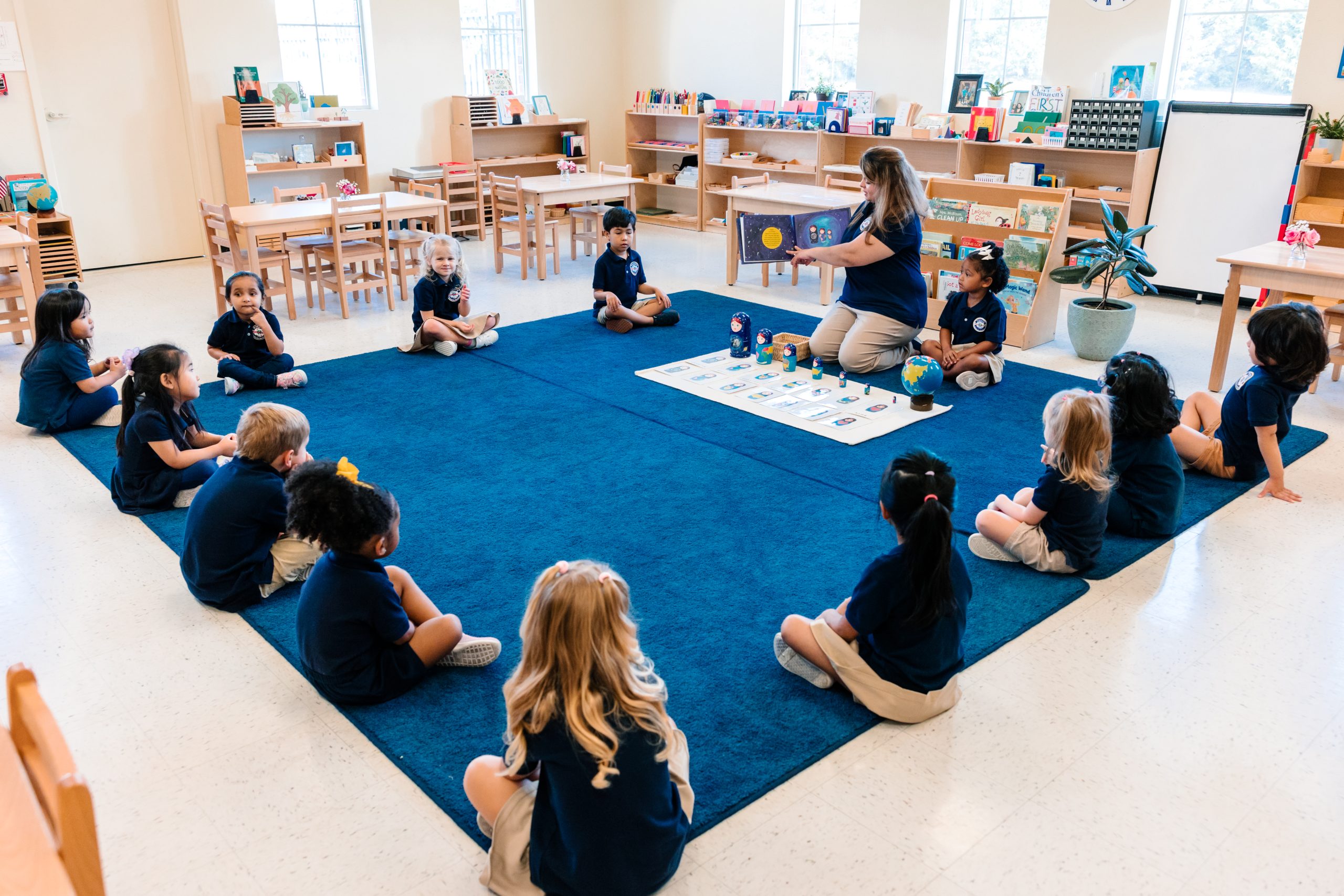
In a daycare setting, activities are usually planned by caregivers. The group often participates together in songs, games, crafts, or lessons.
Neither method is wrong.
They simply reflect different beliefs about how young children learn best.
Montessori classrooms are designed to promote independence.
Furniture is child-sized. Learning materials are placed on accessible shelves. Children move freely throughout the room and select work that interests them.
You’ll often see children of different ages learning together in the same classroom. Older students help younger ones, while younger children learn by observation.
Daycare classrooms typically group children by age. Activities are often organized around the needs and developmental stage of that specific age group.
The environment tends to be more caregiver-directed, with scheduled transitions throughout the day.
In Montessori schools, teachers spend much of their time observing children.
They watch for signs of readiness, introduce new materials, and help children build confidence through independent work.
The goal is not to provide constant instruction but to support natural learning.
Daycare caregivers take a more active leadership role throughout the day. They guide activities, manage schedules, supervise group interactions, and ensure children remain engaged and safe.
Both roles are important, but they require different approaches.
Independence sits at the center of Montessori education.
Children are encouraged to pour their own drinks, clean up after activities, choose their work, and solve age-appropriate problems on their own.
These small responsibilities build confidence over time.
Daycares also encourage independence, but it is usually not the primary focus. Caregivers often provide more direct assistance, especially with younger children who may need extra support throughout the day.
Both Montessori schools and daycares help children develop social skills.
In Montessori classrooms, social learning often happens through collaboration, peer mentoring, and respectful interactions between children of different ages.
Daycares typically provide more opportunities for large-group play and structured social activities. Children spend significant time interacting with peers of the same age, learning how to share, communicate, and cooperate.
Each environment helps children develop important relationship skills, though the experiences may look different.
Tuition varies depending on location, program quality, and schedule.
In many areas, Montessori schools can be more expensive than traditional daycare centers because of specialized teacher training, classroom materials, and educational programming.
However, this isn’t always the case.
Some high-end daycare programs cost as much as or even more than certain Montessori schools.
Parents should compare specific programs rather than assuming one option is always more affordable.
The answer depends on what your family values most.
If you’re looking for a strong educational foundation, hands-on learning, and an environment that promotes independence, Montessori may be a good fit.
If you need flexible childcare with structured routines, group activities, and dependable supervision throughout the workday, daycare may better meet your needs.
Some children thrive in Montessori settings. Others feel more comfortable in traditional daycare environments.
The best choice isn’t about following trends.
It’s about finding a place where your child feels safe, supported, and excited to learn.
Montessori schools and daycares both play valuable roles in early childhood development.
One focuses heavily on child-led learning and independence. The other centers on care, supervision, and structured daily experiences.
Understanding the difference helps parents make a more informed decision.
At the end of the day, the goal is the same: helping children grow, learn, and build a strong foundation for the years ahead.