Building a Foundation for Success: Montessori Education and Early Reading
Few milestones excite parents as much as hearing their child read their first word. It’s one of those moments that feels small and significant at the same time. Suddenly, the letters on a page begin to carry meaning, and a whole new world opens up.
Because reading is such an important skill, many parents wonder how they can give their children the strongest possible start. Some look for programs that teach reading as early as possible. Others focus on memorizing sight words or practicing phonics drills at home.
Montessori education takes a different path.
Rather than rushing children toward reading milestones, Montessori classrooms focus on building the foundational skills that make reading a natural and enjoyable process. The goal isn’t simply to teach children how to decode words. It’s to help them develop a genuine understanding of language, a love of books, and the confidence to become lifelong readers.
By carefully preparing children for literacy through hands-on experiences and individualized learning, Montessori education lays a strong foundation for reading success.
Reading Begins Long Before a Child Opens a Book
Many people think reading starts when children recognize letters or sound out words. In reality, the journey begins much earlier.
Long before children learn to read, they are developing language skills through conversations, stories, songs, and everyday experiences. They are building vocabulary, learning sentence structure, and making connections between spoken language and the world around them.
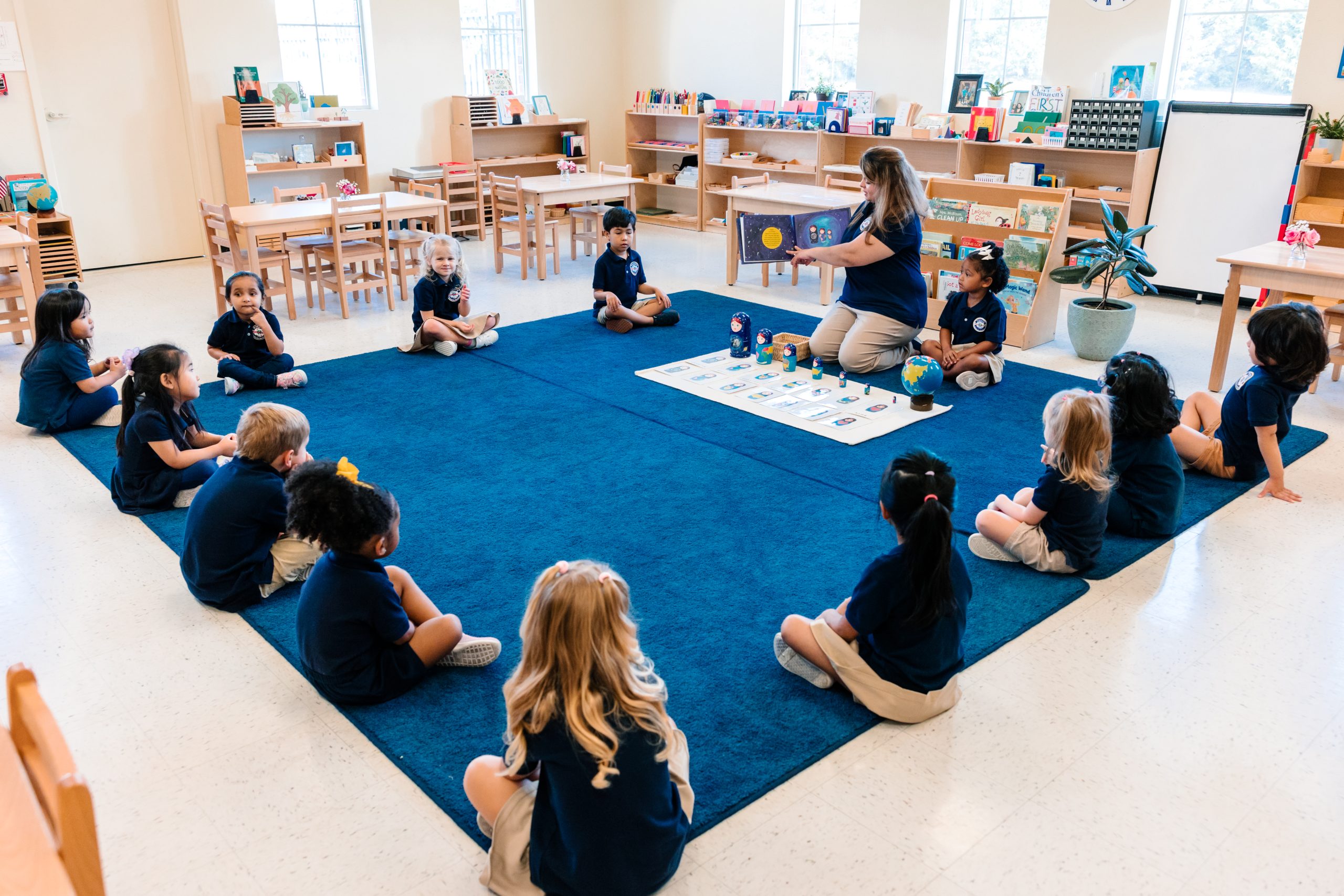
Montessori classrooms recognize the importance of this stage. Teachers engage children in meaningful conversations, introduce rich vocabulary, and encourage them to express their thoughts clearly. These daily interactions strengthen language development and prepare children for future literacy skills.
A child with a strong language foundation often finds it easier to understand what they read later on.
Learning Through the Senses
One of the most distinctive features of Montessori education is its emphasis on sensory learning.
Young children learn best when they can see, touch, hear, and interact with concepts directly. Instead of introducing letters solely through worksheets or flashcards, Montessori classrooms use materials that engage multiple senses at once.
Sandpaper letters are one of the most well-known examples. Children trace the shape of a letter with their fingers while hearing its sound spoken aloud. This simple activity combines movement, touch, sight, and sound into a single learning experience.
Because children interact physically with language concepts, they often develop stronger letter recognition and sound awareness than they would through passive instruction alone.
Focusing on Sounds Before Names
In many traditional settings, children are taught letter names first. Montessori education often takes a different approach by emphasizing letter sounds before letter names.
This may seem like a small distinction, but it plays an important role in early reading development. When children learn the sound a letter makes, they can begin connecting sounds together to form words.
For example, understanding the sounds of “c,” “a,” and “t” helps a child decode the word “cat.” Learning the letter names alone doesn’t provide the same immediate connection to reading.
By focusing on phonetic awareness early, Montessori education helps children build the skills needed to read independently.
The Role of the Movable Alphabet
Before many Montessori children begin writing with pencils, they often use a tool called the Movable Alphabet.
This material consists of individual letters that children can arrange to create words and sentences. Instead of worrying about handwriting, they can focus entirely on sounds, word formation, and language structure.
A child may begin by building simple words they can sound out. As their skills develop, they gradually create more complex phrases and sentences. This process allows children to experiment with written language while building confidence in their reading and writing abilities.
For many children, the Movable Alphabet serves as a bridge between spoken language and independent literacy.
Following the Child’s Readiness
One of the reasons Montessori reading instruction feels different is that it respects individual development.
Not every child learns to read at the same age or in the same way. Some children show interest in letters very early, while others spend more time developing language skills before becoming interested in reading.
Rather than forcing all children to follow the same timeline, Montessori teachers observe carefully and introduce lessons when children show signs of readiness. This individualized approach helps reduce frustration and allows children to progress at a pace that feels natural.
When learning aligns with developmental readiness, children often experience greater success and enjoyment.
Building a Love of Reading
Learning how to read is important. Wanting to read is equally valuable.
Montessori classrooms strive to create positive associations with books and language from an early age. Children are surrounded by stories, conversations, poetry, and opportunities to explore literature independently.
Reading is not presented as a chore or a task to complete. It becomes a tool for discovery.
Children who enjoy books are more likely to read voluntarily, explore new topics, and continue developing literacy skills throughout their lives. This love of reading can be just as important as any academic milestone.
Confidence Through Independent Learning
One of the most powerful aspects of Montessori education is the confidence children gain through self-directed learning.
Because Montessori materials are designed to encourage independent exploration, children often experience the satisfaction of making discoveries on their own. They learn to recognize sounds, build words, and read simple texts through active participation rather than constant correction.
Each success builds confidence.
A child who feels capable as a reader is more likely to take on new challenges, attempt unfamiliar words, and continue developing literacy skills with enthusiasm.
Why Early Reading Matters
Reading influences nearly every aspect of education. Strong literacy skills support learning in science, mathematics, history, and countless other subjects.
Beyond academics, reading opens doors to imagination, creativity, and lifelong learning. It allows children to explore different perspectives, discover new ideas, and engage with the world in meaningful ways.
A strong reading foundation doesn’t just prepare children for school. It prepares them for opportunities that extend far beyond the classroom.
Final Thoughts
Montessori education approaches early reading as a developmental journey rather than a race. By focusing on language development, sensory learning, phonetic awareness, and individualized instruction, Montessori classrooms help children build the skills and confidence needed for long-term literacy success.
Most importantly, Montessori education recognizes that reading is about more than recognizing words on a page. It is about communication, understanding, curiosity, and connection. When children are given the time, tools, and support they need, reading becomes more than a subject to learn—it becomes a lifelong source of knowledge and enjoyment.
The strongest readers are not always the ones who start first. Often, they are the ones who develop a solid foundation and a genuine love for learning along the way.