
Montessori School Near McKinney
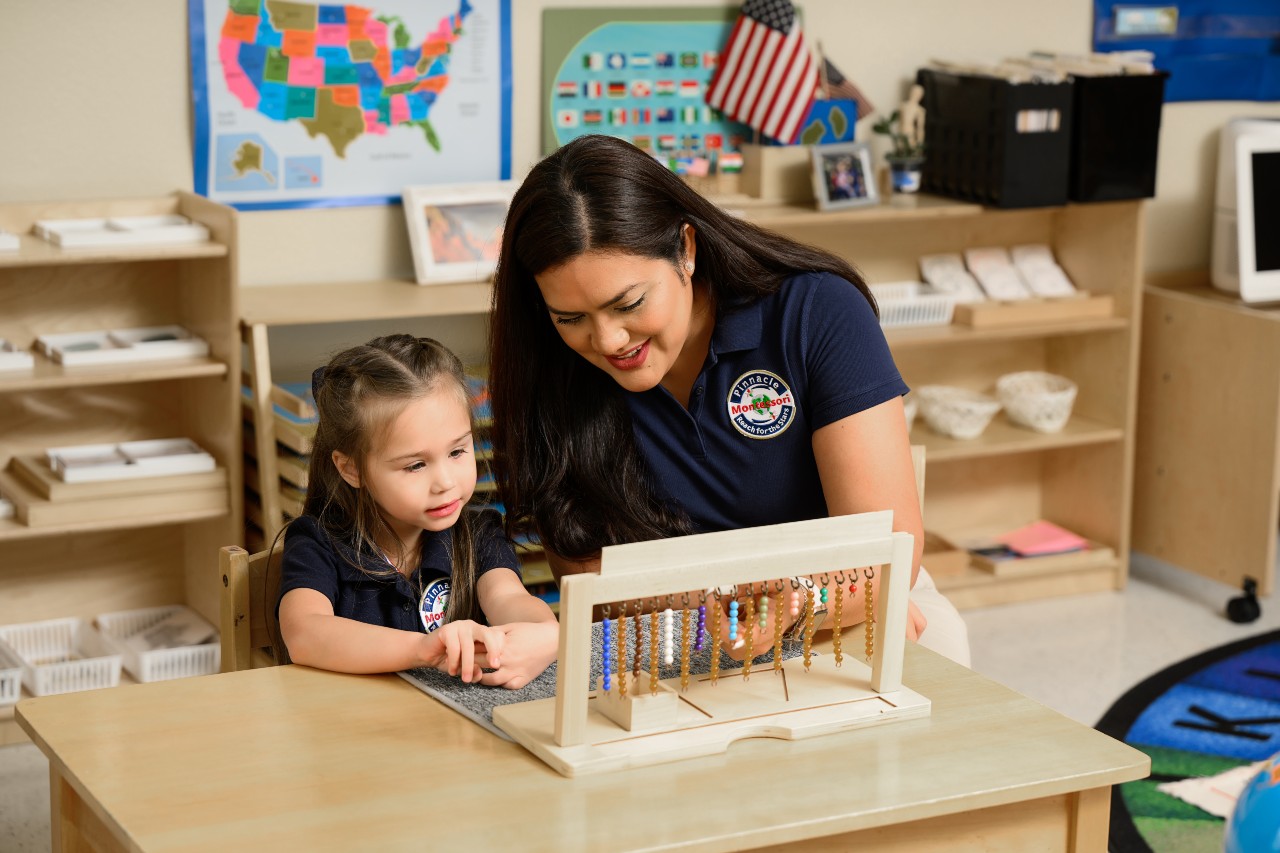
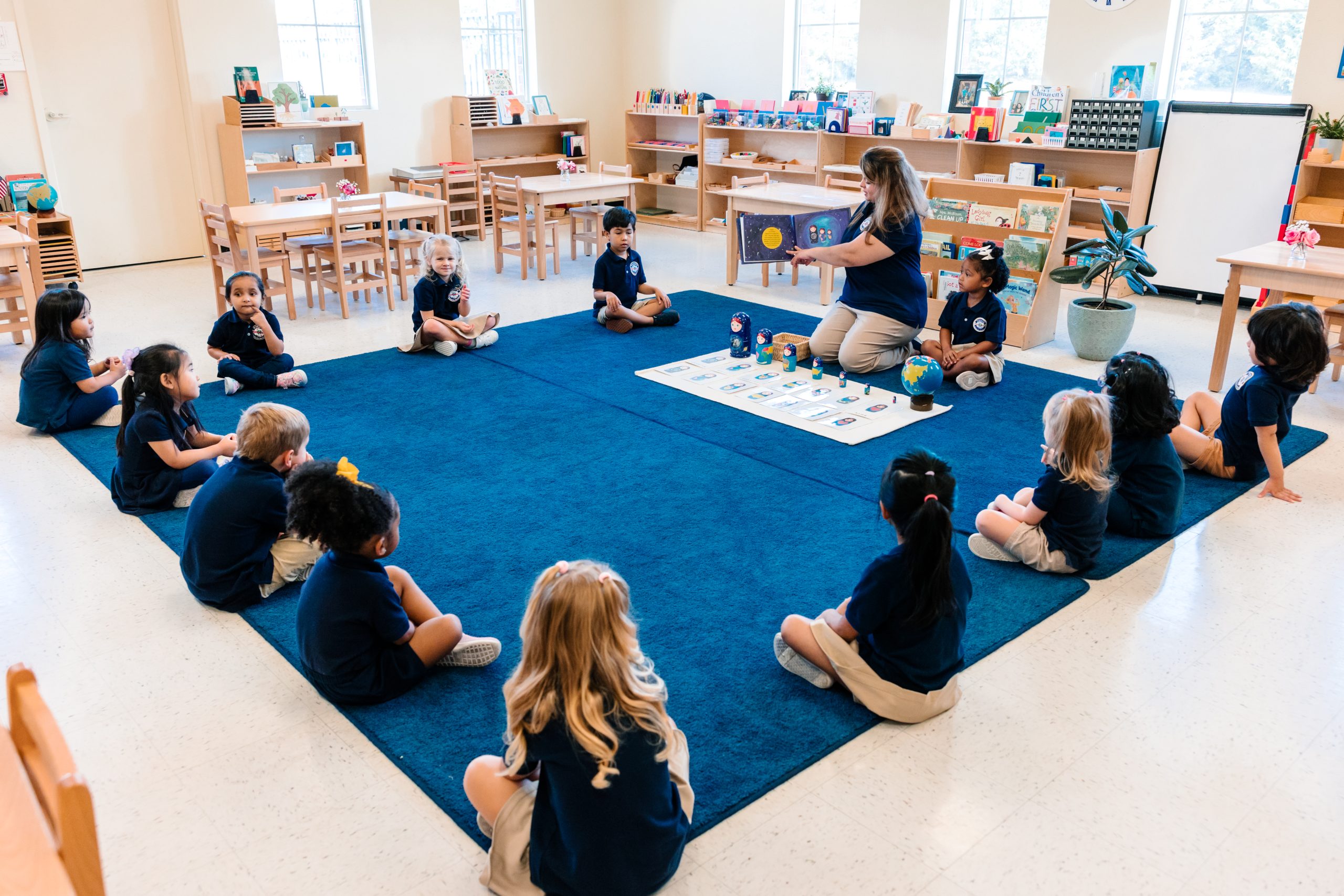
Dr. Maria Montessori introduced her revolutionary educational approach in the early 1900s, and today the Montessori Method continues to inspire schools around the world. At the heart of Montessori education are specially designed learning materials that encourage children to explore, discover, and learn independently.
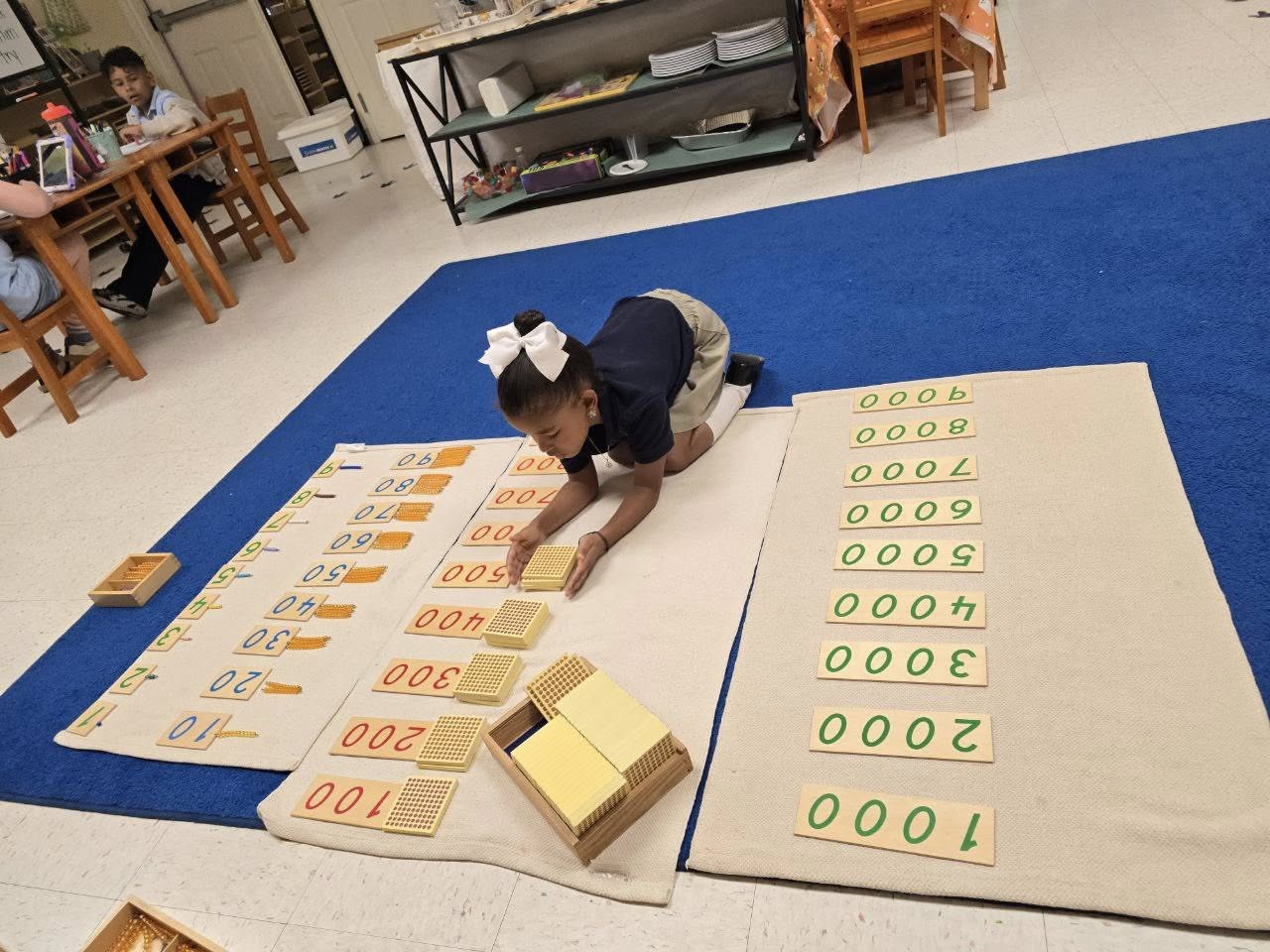
Unlike traditional teaching tools, Montessori materials are carefully crafted to engage a child’s senses and support hands-on learning. While many of these materials may appear simple, each serves a specific developmental purpose, helping children build academic, social, emotional, and practical life skills through meaningful experiences.
Let’s explore some of the most recognizable Montessori materials and how they support a child’s growth and development.
The Pink Tower is one of the most iconic Montessori materials. It consists of ten pink wooden cubes that gradually decrease in size from largest to smallest.
As children stack the cubes in sequence, they develop visual discrimination, concentration, coordination, and an understanding of size relationships. The activity also lays an early foundation for mathematical concepts such as comparison, sequencing, and dimension.
Cylinder Blocks are designed to help children refine visual perception, hand-eye coordination, and fine motor skills.
Each wooden block contains cylinders of varying heights and diameters that children remove and replace in their corresponding spaces. Through repeated practice, children learn to distinguish subtle differences in size while strengthening concentration and problem-solving abilities.
Sandpaper Letters introduce children to language through a multi-sensory experience.
Each letter is cut from textured sandpaper and mounted on a smooth board. Children trace the letter with their fingers while hearing and repeating its sound. This tactile approach helps children connect letter shapes with sounds, creating a strong foundation for reading and writing.
Because the activity engages multiple senses, it is especially effective for supporting a wide range of learning styles.
Number Rods help children understand numerical concepts in a concrete way.
The rods vary in length and represent quantities from one to ten. By physically handling the rods, children develop a visual and tactile understanding of numbers, quantity, sequencing, and early mathematical operations such as addition and subtraction.
The Moveable Alphabet is a powerful literacy tool that allows children to build words and sentences before they are able to write comfortably with a pencil.
Using individual letters, children experiment with sounds, spelling, and language structure. This hands-on approach helps bridge the gap between spoken language and written communication while making reading and writing more accessible and enjoyable.
These advanced Montessori materials introduce children to algebraic concepts through visual and hands-on exploration.
The Binomial Cube consists of eight wooden blocks that fit together to form a larger cube, while the Trinomial Cube contains twenty-seven pieces. Through manipulation and repetition, children develop spatial reasoning, pattern recognition, logical thinking, and problem-solving skills.
Metal Insets help prepare children for handwriting while strengthening fine motor control.
Children trace geometric shapes using colored pencils, practicing precision, pencil grip, hand control, and concentration. In addition to developing pre-writing skills, this activity encourages creativity and artistic expression.
Practical Life is a cornerstone of Montessori education. Children participate in real-world activities such as pouring, spooning, sweeping, watering plants, food preparation, and caring for their environment.
These experiences build independence, coordination, concentration, responsibility, and self-confidence while helping children develop valuable life skills.
Dressing Frames were created by Dr. Montessori to help children master everyday self-care skills.
Each frame focuses on a specific fastening method, such as buttons, zippers, snaps, buckles, or shoelaces. These activities strengthen fine motor skills while fostering independence and self-sufficiency.
Puzzle Maps make geography engaging and interactive.
Children remove and replace individual countries, states, or continents, developing an understanding of geography through hands-on exploration. This tactile approach helps children build spatial awareness while fostering curiosity about the world around them.
The Botany Cabinet introduces children to the study of plants through a collection of wooden puzzle shapes representing different leaf forms.
Children learn to observe, compare, classify, and identify various plant structures while developing scientific observation skills and a deeper appreciation for nature.
Classification Cards help children expand their vocabulary and understanding of the world around them.
Through matching and sorting activities, children learn to categorize objects, animals, plants, occupations, and other concepts, strengthening language development and cognitive skills.
Montessori materials are intentionally designed to support learning through direct experience. Rather than memorizing information, children actively engage with concepts using their hands, senses, and natural curiosity.
Montessori materials engage visual, auditory, tactile, and kinesthetic learning pathways. This multi-sensory approach helps children develop a deeper understanding of concepts while accommodating different learning styles.
Many Montessori materials are self-correcting, allowing children to recognize and correct their own mistakes without constant adult intervention. This builds confidence, resilience, and independent problem-solving skills.
Montessori education recognizes that every child develops differently. The materials are designed to meet children where they are developmentally and allow them to progress at their own pace.
Beyond academic concepts, Montessori materials help children develop concentration, responsibility, critical thinking, creativity, and self-motivation—skills that support success throughout life.
Montessori materials are much more than educational tools. They are carefully designed experiences that help children develop confidence, independence, curiosity, and a genuine love of learning.
By engaging children through hands-on exploration and meaningful discovery, the Montessori Method creates opportunities for growth that extend far beyond the classroom. Whether learning language, mathematics, geography, science, or practical life skills, children gain the tools they need to become capable, confident, and lifelong learners.