Fostering a Culture of Empathy in Montessori Classrooms
For parents considering Montessori education, one question often comes up during school tours and admissions meetings:
“What does a typical day actually look like?”
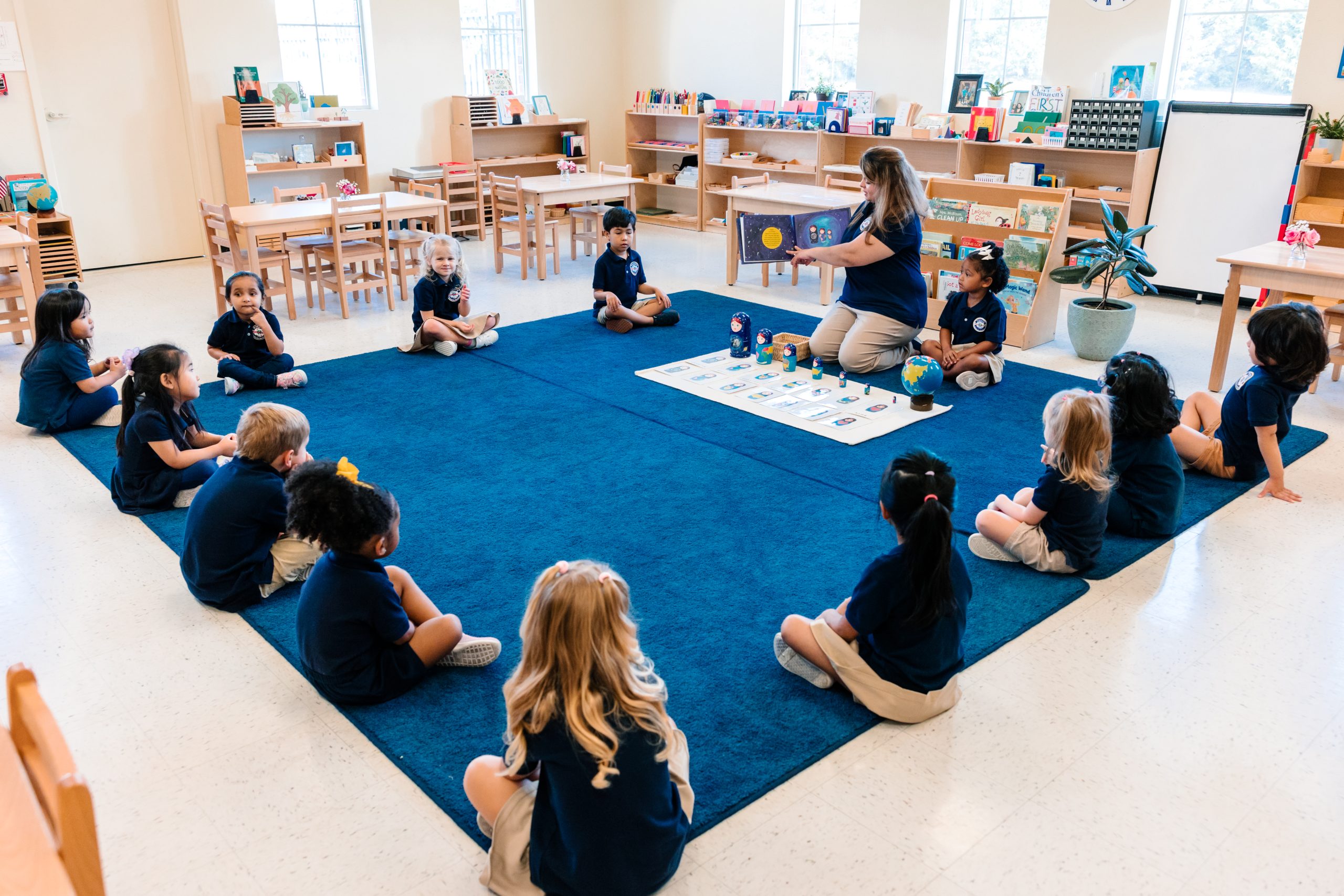
It’s a fair question. Montessori classrooms can look very different from traditional schools. Instead of rows of desks facing a teacher, you’ll often see children moving around the room, working independently, collaborating with classmates, and choosing activities based on their interests and developmental needs.
At first glance, the classroom may appear less structured than a conventional school setting. Look a little closer, however, and you’ll discover a carefully prepared environment where every activity has a purpose and every part of the day supports a child’s growth.
While schedules vary between schools and age groups, here’s an inside look at what a typical day might look like for a Montessori student.
Starting the Day With Independence
The school day often begins with a calm and welcoming arrival rather than a rushed transition into lessons.
As students enter the classroom, they typically take responsibility for their belongings, putting away backpacks, hanging up jackets, and preparing themselves for the day. These simple routines may seem minor, but they help children develop independence and responsibility from an early age.
Teachers greet students warmly and observe how each child is feeling. This gentle start allows children to settle into the classroom environment and begin the day with confidence.
Rather than immediately directing every student toward the same activity, Montessori classrooms encourage children to ease into their work thoughtfully and independently.
The Morning Work Cycle
One of the most important parts of a Montessori day is the uninterrupted work cycle.
Unlike traditional classrooms, where lessons are often divided into short periods, Montessori students are typically given a longer block of time to engage deeply with meaningful activities. During this period, children choose work based on their interests, developmental needs, and guidance from their teacher.
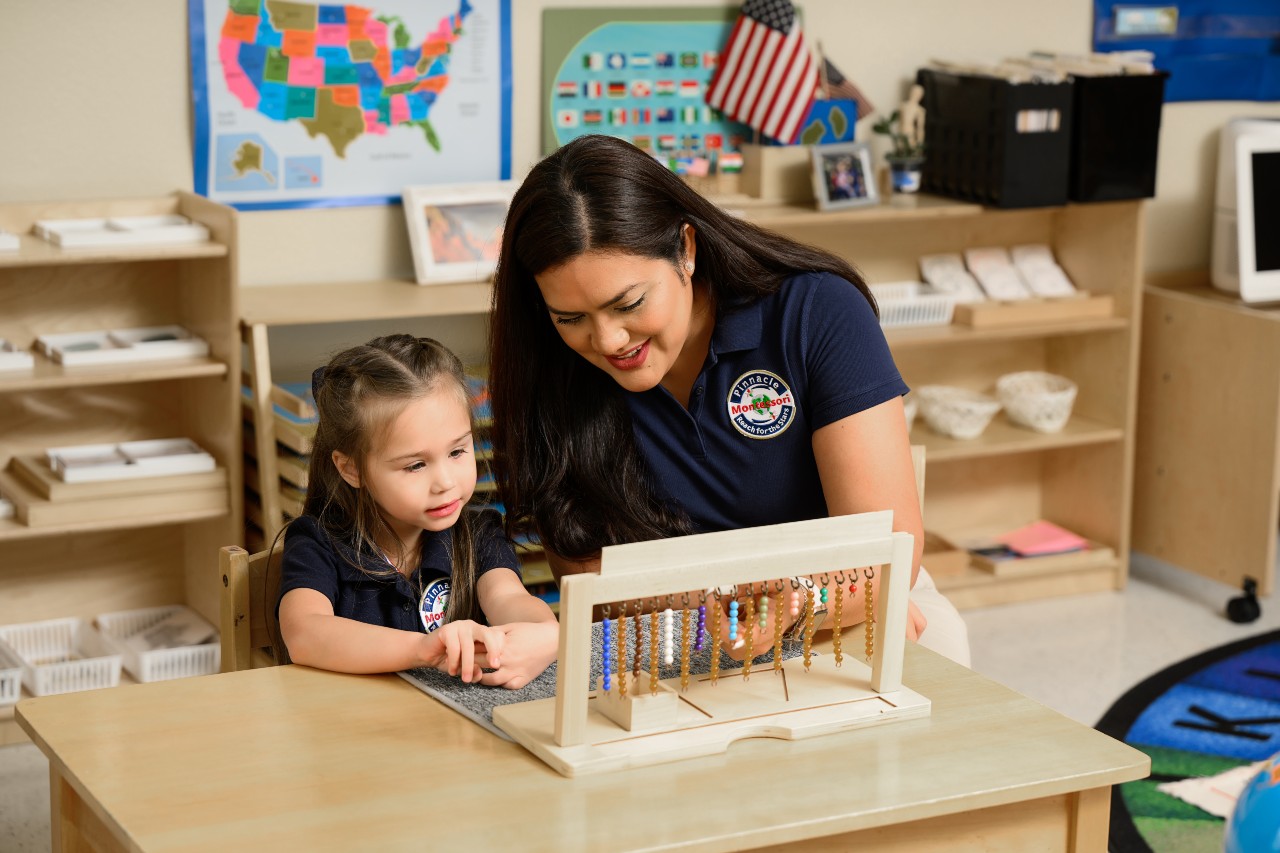
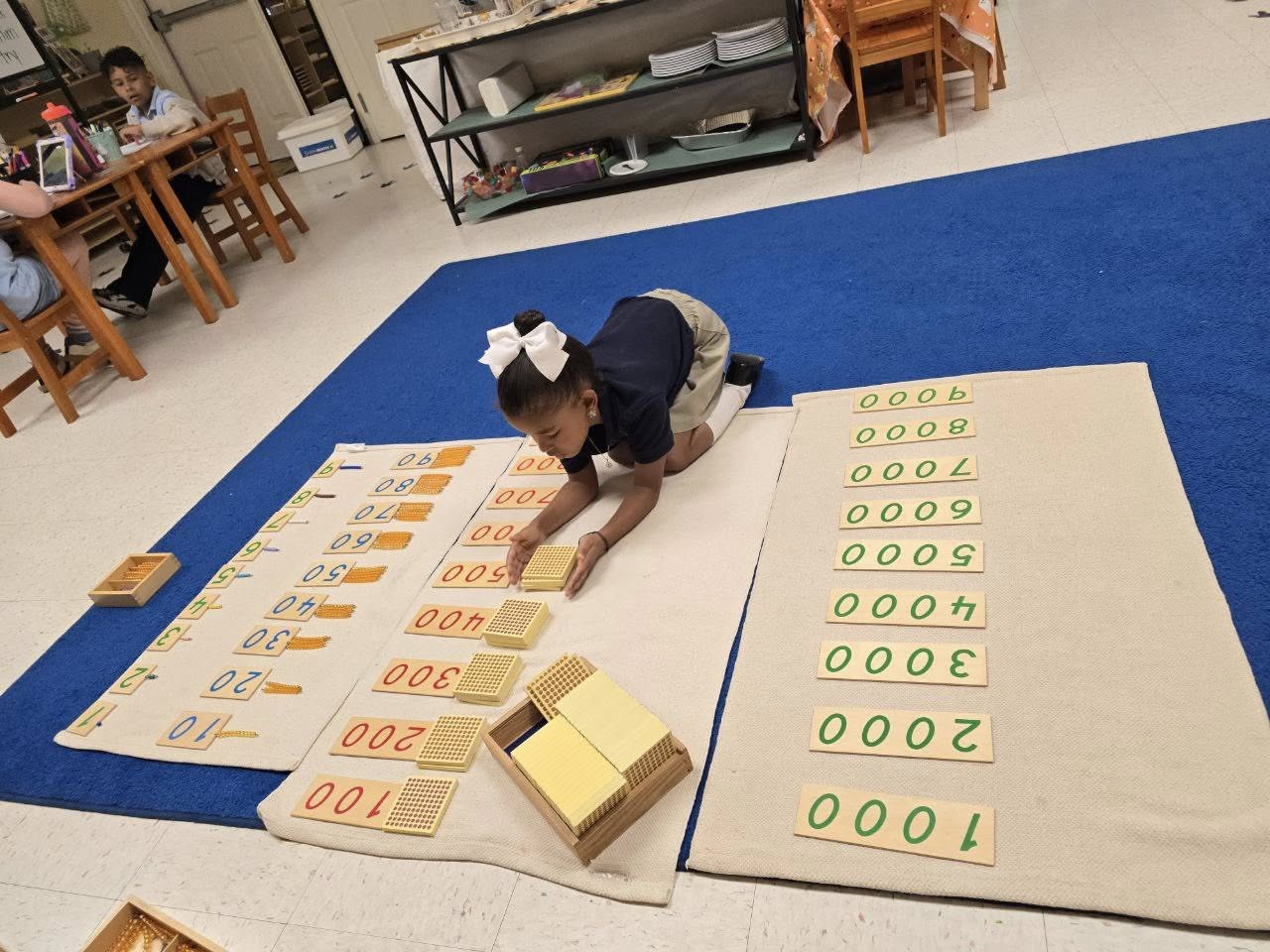
A child might begin the morning practicing reading skills with language materials. Nearby, another student may be working with math beads, while someone else explores a science activity or completes a practical life exercise.
The classroom is active but purposeful. Children move freely, select materials, and concentrate on tasks without constant interruptions. This extended work period helps students develop focus, problem-solving abilities, and a sense of ownership over their learning.
Individual and Small-Group Lessons
Although Montessori education emphasizes independent learning, teachers remain actively involved throughout the day.
Rather than teaching every student the same lesson simultaneously, Montessori guides often work with children individually or in small groups. These lessons are carefully timed to match each student’s readiness and progress.
For example, one child may receive a lesson on letter sounds, while another is introduced to multiplication concepts. Older students might explore geography, science, or advanced language activities.
This personalized approach allows children to move forward when they are ready instead of being limited by a fixed classroom pace.
Learning Practical Life Skills
Montessori education extends beyond traditional academics.
Throughout the day, children participate in practical life activities that help them develop coordination, responsibility, and independence. Younger students may practice pouring water, arranging flowers, sweeping floors, or preparing simple snacks.
These tasks are not viewed as chores. They are considered valuable learning experiences that strengthen concentration, fine motor skills, and self-confidence.
A child who learns how to care for their environment also begins to understand the importance of responsibility and contribution within a community.
Building Social Skills Through Daily Interactions
Montessori classrooms are often known for their strong sense of community.
Because students work in shared spaces and frequently interact with peers, they have many opportunities to practice communication and cooperation. Mixed-age classrooms play an important role in this process.
Younger children observe older students and learn from their example. Older students often assist younger classmates, helping them understand materials or navigate classroom routines.
These interactions encourage patience, empathy, leadership, and respect. Instead of competing against one another, students learn how to support each other’s growth.
Outdoor Exploration and Movement
Children need movement, and Montessori education recognizes this.
Most Montessori programs include outdoor play, nature exploration, and opportunities for physical activity throughout the day. Whether children are climbing, running, gardening, observing insects, or simply spending time outdoors, these experiences support both physical and cognitive development.
Outdoor environments also provide valuable opportunities for discovery. A walk through the playground or garden can spark conversations about science, weather, plants, and the natural world.
For many students, these moments become some of the most memorable parts of the school day.
Lunch and Community Time
Mealtimes in Montessori schools often reflect the same values found throughout the classroom.
Children are encouraged to participate in age-appropriate responsibilities such as setting tables, serving food, cleaning up, and practicing good manners. Lunch becomes more than a break between lessons. It becomes another opportunity for learning and community building.
Sharing meals with classmates encourages conversation, social development, and respect for others. Children learn how to interact in a group setting while developing practical skills they can use at home as well.
Afternoon Activities and Continued Exploration
As the day continues, students often engage in additional lessons, creative projects, cultural studies, music, art, or collaborative activities.
The exact schedule varies by age group and school, but the Montessori philosophy remains consistent. Children continue exploring concepts through hands-on experiences and active participation rather than passive instruction.
Teachers observe, guide, and support learning while encouraging students to take increasing responsibility for their work and decision-making.
Throughout the day, children are constantly developing academic knowledge alongside important life skills.
Ending the Day With Reflection
As the school day comes to a close, students typically help restore order to the classroom. Materials are returned to shelves, workspaces are organized, and preparations are made for the next day.
This routine reinforces responsibility and respect for the learning environment.
Many children leave school with stories about discoveries they made, projects they completed, or questions they want to explore further. Learning doesn’t feel confined to a schedule because curiosity continues beyond the classroom walls.
More Than a School Day
At first glance, a Montessori classroom may look different from what many adults experienced growing up. There is often more movement, more choice, and more independence.
Yet beneath that freedom lies a carefully structured environment designed to help children develop concentration, confidence, responsibility, and a love of learning.
A Montessori student’s day is not simply a series of lessons. It’s a collection of experiences that encourage exploration, problem-solving, collaboration, and personal growth. Each activity, whether academic or practical, contributes to the development of the whole child.
Final Thoughts
A day in the life of a Montessori student is filled with opportunities to learn, explore, and grow. From independent work and personalized lessons to practical life activities and social interactions, every part of the day is designed to support a child’s development.
What makes Montessori unique is not just what children learn, but how they learn it. Students are encouraged to take an active role in their education, follow their curiosity, and develop confidence in their abilities.
By the end of the day, children leave with more than academic knowledge. They leave with experiences that help shape them into independent, capable, and lifelong learners.