Understanding Montessori: The Key Principles That Transform Learning
More than a century after its creation, Montessori education continues to attract parents, educators, and schools around the world. While many people have heard the term “Montessori,” fewer understand what actually makes this approach different from traditional education.
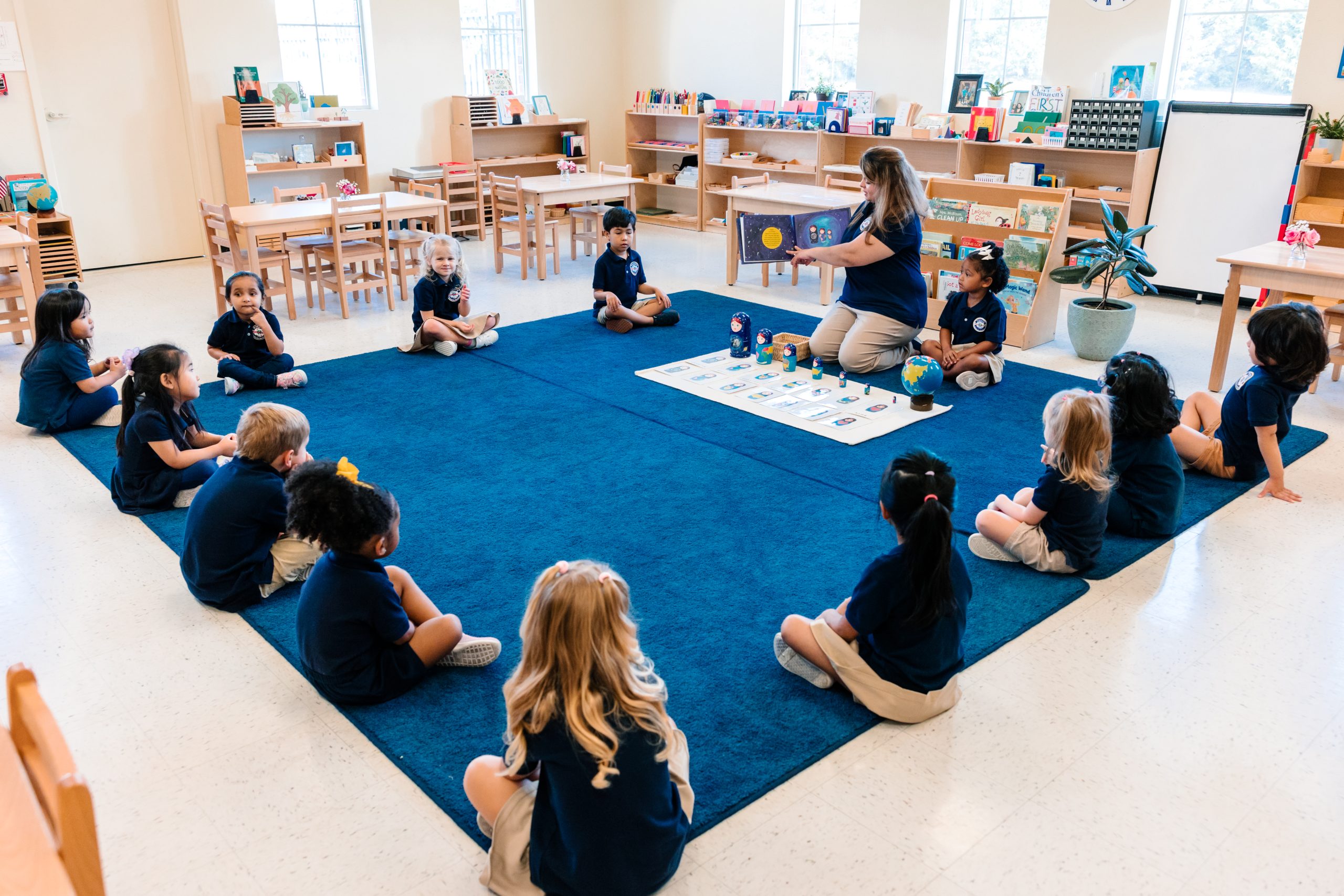
At first glance, a Montessori classroom can seem unusual. Children move freely around the room. Students of different ages often learn together. Teachers are not constantly standing at the front delivering lessons. Instead, children are actively engaged in hands-on activities, exploring concepts independently, and working at their own pace.
These differences are not random. They are rooted in a set of carefully developed principles that guide every aspect of the Montessori method.
Understanding these core ideas helps explain why Montessori education has remained influential for generations and why so many families believe it provides a powerful foundation for lifelong learning.
The Child Is at the Center of Learning
One of the most important Montessori principles is the belief that every child is a unique learner.
Traditional classrooms often follow a standardized model where students of the same age learn the same material at the same pace. Montessori education takes a different approach. It recognizes that children develop differently and may be ready for certain concepts at different times.
Rather than expecting all students to move through identical lessons, Montessori teachers observe each child carefully and introduce new challenges based on individual readiness and interest. This allows children to build confidence while progressing in a way that feels natural and meaningful.
When learning aligns with a child’s developmental stage, children often become more engaged, motivated, and willing to take ownership of their education.
Learning Through Hands-On Experiences
Young children learn best by doing.
Maria Montessori observed that children develop deeper understanding when they can interact directly with concepts rather than simply hearing about them. As a result, Montessori classrooms are filled with carefully designed materials that allow students to explore ideas through touch, movement, and observation.
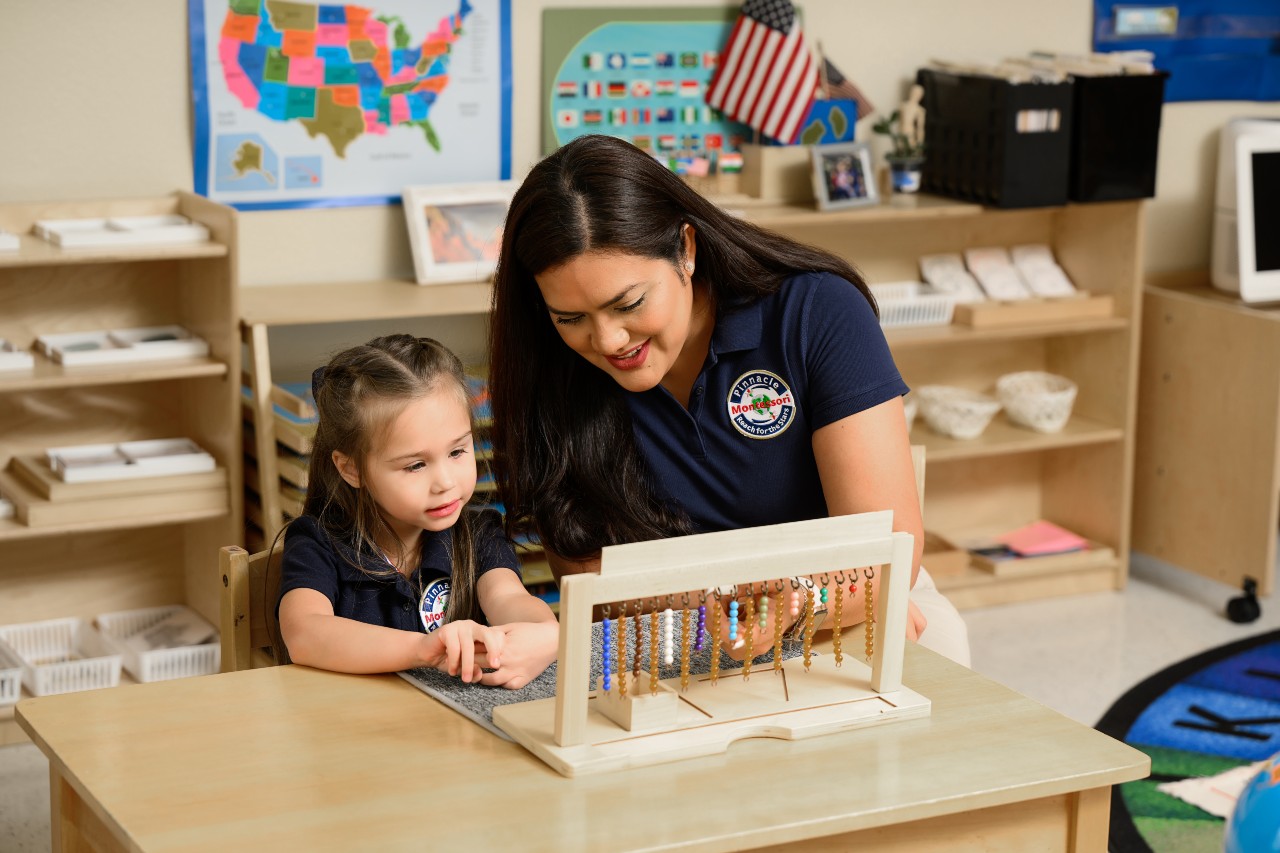
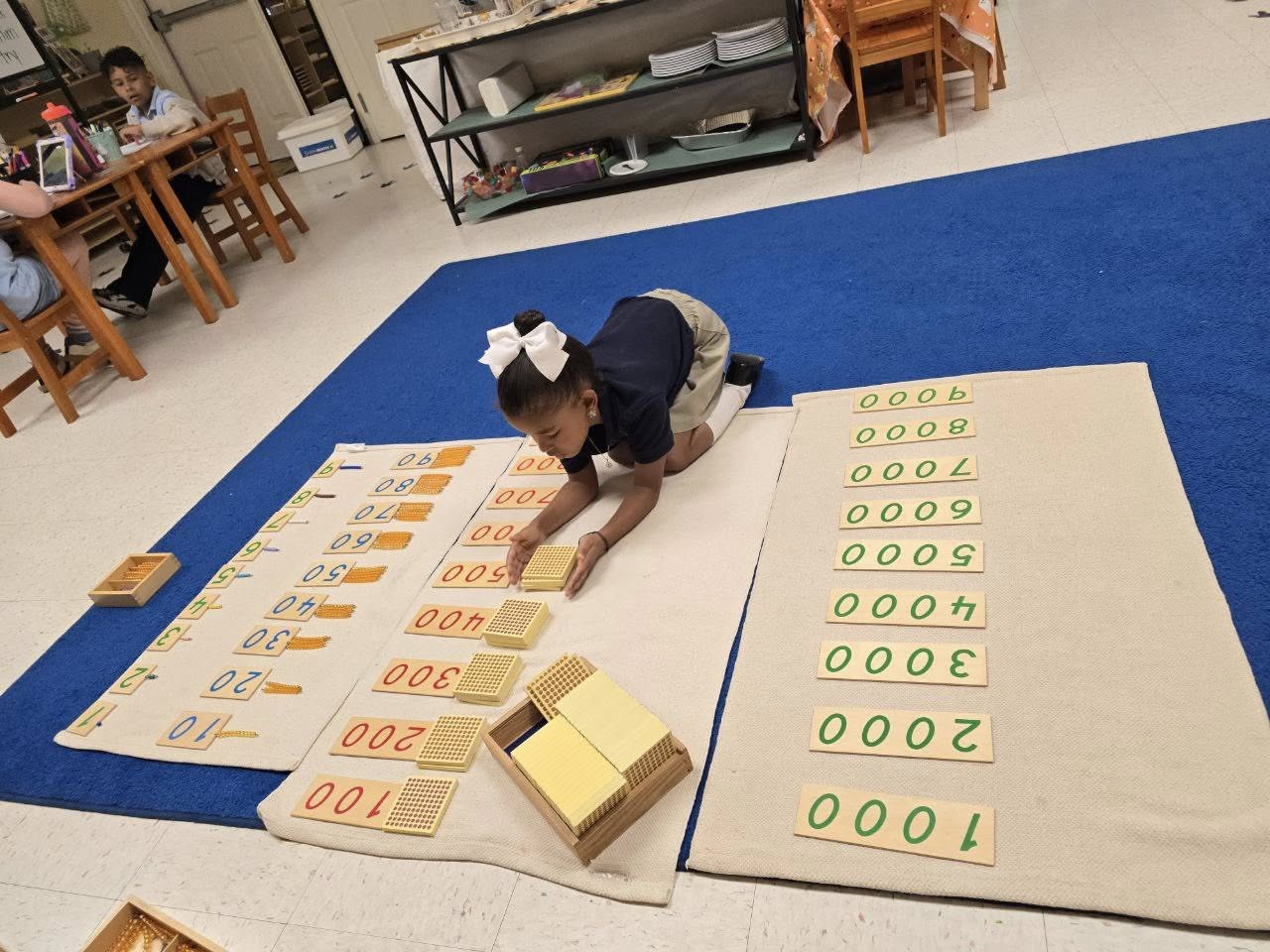
A child learning mathematics might use beads and number rods to physically see quantities. A language lesson may involve tracing letters with fingers before learning to write them on paper. Geography, science, and cultural studies often include activities that allow children to investigate concepts through direct experience.
This hands-on approach transforms learning from something passive into something active. Children are not simply receiving information. They are discovering it for themselves.
Independence Is a Core Goal
Walk into a Montessori classroom, and you’ll quickly notice that children are encouraged to do a great deal on their own.
They select activities, care for materials, clean their workspaces, and solve many everyday challenges independently. Even young children are trusted with responsibilities that help them develop confidence and self-reliance.
This focus on independence is not about pushing children to grow up too quickly. It’s about giving them opportunities to develop competence and trust in their abilities.
When children repeatedly experience success through their own efforts, they begin to see themselves as capable learners and problem-solvers. That confidence often extends beyond the classroom into other areas of life.
Respect for the Child
Respect is one of the foundational values of Montessori education.
Children are viewed as capable individuals deserving of dignity, patience, and understanding. Teachers guide rather than control. They listen carefully, encourage thoughtful decision-making, and create environments where children feel valued.
This respect also extends to the pace of learning. Rather than rushing children toward specific milestones, Montessori educators recognize that development unfolds differently for each individual.
When children feel respected, they are often more willing to take risks, ask questions, and engage fully in the learning process.
The Prepared Environment
The Montessori classroom is often referred to as a “prepared environment.”
Every detail is intentionally designed to support learning and independence. Furniture is sized for children. Materials are organized on accessible shelves. Activities are arranged in a logical sequence that encourages exploration and progression.
This thoughtful setup allows children to move through the classroom with confidence. They can choose activities, return materials independently, and take responsibility for their surroundings.
The environment itself becomes an important part of the educational experience. It encourages order, responsibility, concentration, and self-discipline without relying on constant adult direction.
Freedom Within Limits
One of the most misunderstood aspects of Montessori education is the concept of freedom.
Children are given choices, but those choices exist within carefully established boundaries. Students may choose which activity to work on, but they are expected to use materials appropriately, respect others, and contribute positively to the classroom community.
This balance helps children develop self-discipline rather than simply following external rules. They learn how to make responsible decisions, manage their time, and understand the consequences of their actions.
Freedom within limits teaches an important life lesson: independence and responsibility go hand in hand.
Mixed-Age Learning Communities
Most Montessori classrooms include children from a range of ages rather than grouping students strictly by birth year.
This structure creates a learning community where younger children can observe and learn from older classmates, while older students reinforce their understanding by helping others.
A younger child may watch an older student complete a challenging activity and become motivated to learn the same skill. Meanwhile, the older child develops leadership, patience, and communication abilities through mentoring.
These relationships foster cooperation rather than competition and create a classroom culture where students support one another’s growth.
Following the Child’s Natural Curiosity
Curiosity drives learning.
Children are naturally eager to explore the world around them, ask questions, and investigate new ideas. Montessori education seeks to protect and nurture that curiosity rather than replace it with excessive external rewards or pressure.
Teachers observe what captures a child’s interest and use those interests as opportunities for deeper learning. When children are genuinely curious about a subject, they often engage with greater focus and enthusiasm.
This principle helps transform learning from an obligation into a meaningful and enjoyable experience.
Educating the Whole Child
Montessori education extends beyond academics.
While reading, writing, mathematics, and science remain important, equal attention is given to social, emotional, physical, and practical development. Children learn how to communicate respectfully, resolve conflicts, care for their environment, and contribute to a community.
The goal is not simply to produce strong students. It is to help children become confident, responsible, compassionate individuals who can navigate life successfully.
This holistic approach remains one of the defining features of Montessori education and one of the reasons it continues to resonate with families worldwide.
Final Thoughts
The Montessori method is built on a set of principles that respect children’s natural development and encourage active participation in learning. Through independence, hands-on exploration, individualized instruction, and carefully prepared environments, children are given opportunities to develop both academic knowledge and essential life skills.
What makes Montessori unique is not any single material or classroom practice. It is the philosophy that guides the entire learning experience. By trusting children’s capabilities, nurturing their curiosity, and supporting their growth as whole individuals, Montessori education creates an environment where meaningful learning can thrive.
More than a century after its introduction, these principles continue to transform classrooms and inspire generations of learners.