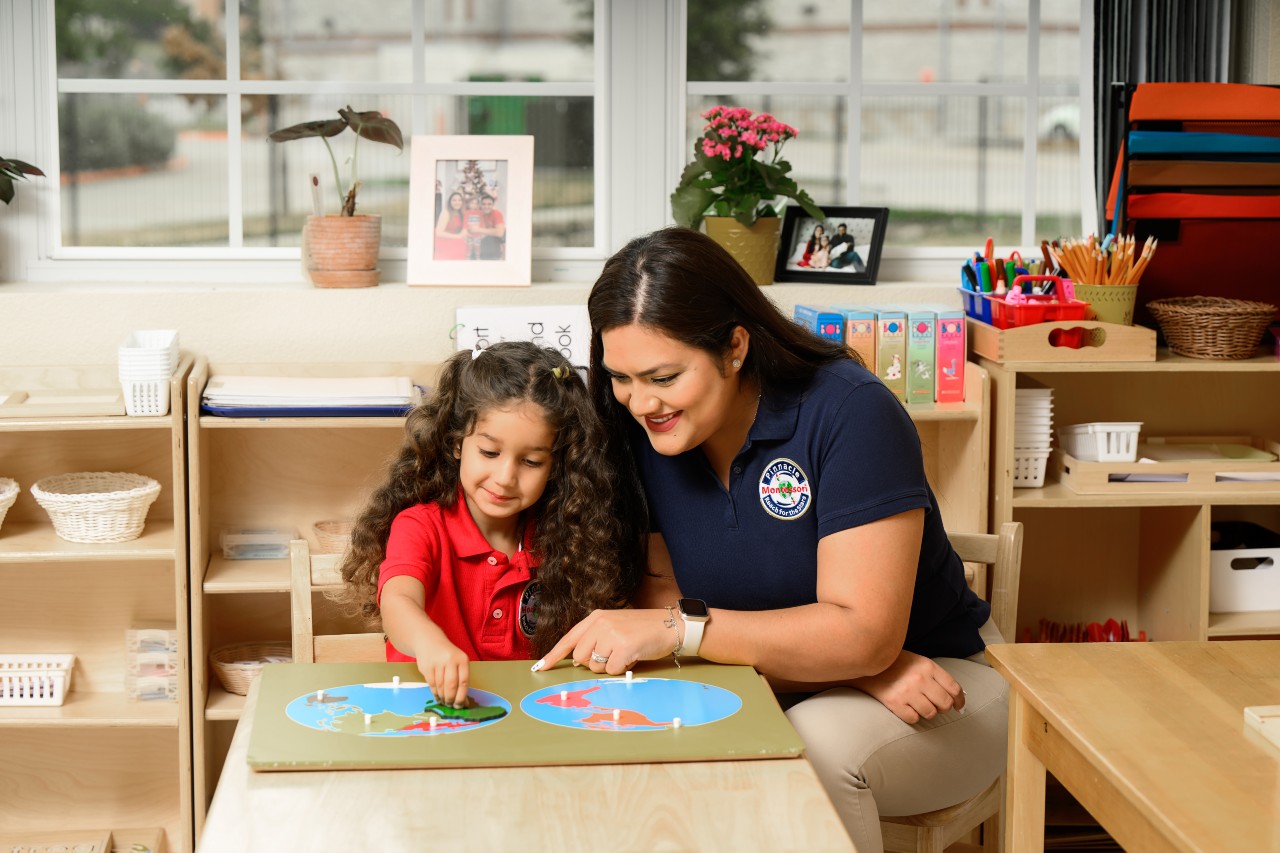
The Montessori environment is thoughtfully designed to support every aspect of a child’s growth, nurturing not only academic achievement but also social, emotional, physical, and cognitive development. Based on Dr. Maria Montessori’s observations of how children naturally learn, the Montessori approach creates meaningful opportunities for children to develop independence, confidence, and a lifelong love of learning.
Building Independence and Self-Confidence
One of the foundational principles of Montessori education is fostering independence. The classroom, often referred to as the Prepared Environment, is carefully arranged to meet the developmental needs of children. Child-sized furniture, accessible learning materials, and purposeful activities allow children to navigate the classroom with confidence and make choices independently.
Children are encouraged to care for themselves and their environment through everyday activities such as pouring water, preparing snacks, organizing materials, and cleaning up after their work. As they successfully complete these tasks, they develop a strong sense of competence and self-reliance.
This growing independence helps children build confidence in their abilities and creates a positive self-image that supports future learning and personal growth.
Developing Concentration and a Love of Learning
Montessori classrooms are designed to encourage deep concentration and purposeful engagement. Unlike traditional learning environments that often follow a group-paced schedule, Montessori allows children to work on activities for extended, uninterrupted periods of time.
The carefully designed Montessori materials are self-correcting, enabling children to learn through exploration and discovery while developing problem-solving skills and persistence. Because children are motivated by the satisfaction of mastering a skill rather than external rewards, they develop an intrinsic love of learning.
These experiences strengthen focus, self-discipline, and the ability to engage deeply with meaningful work—skills that benefit children throughout their educational journey and beyond.
Supporting Social and Emotional Growth
The Montessori mixed-age classroom plays a significant role in supporting social and emotional development. Typically spanning a three-year age range, these classrooms create a collaborative community where children learn from and support one another.
Older children naturally become mentors and role models, reinforcing their own knowledge while helping younger classmates. Younger children gain confidence by observing and learning from their older peers.
In addition, Montessori classrooms emphasize Grace and Courtesy lessons that teach children how to communicate respectfully, resolve conflicts peacefully, practice empathy, and demonstrate kindness toward others. These experiences help children develop emotional intelligence, social awareness, and a strong sense of community.